Linda Ronstadt’s “Blue Bayou” and the Pop-Country Crossover That Defined 1977
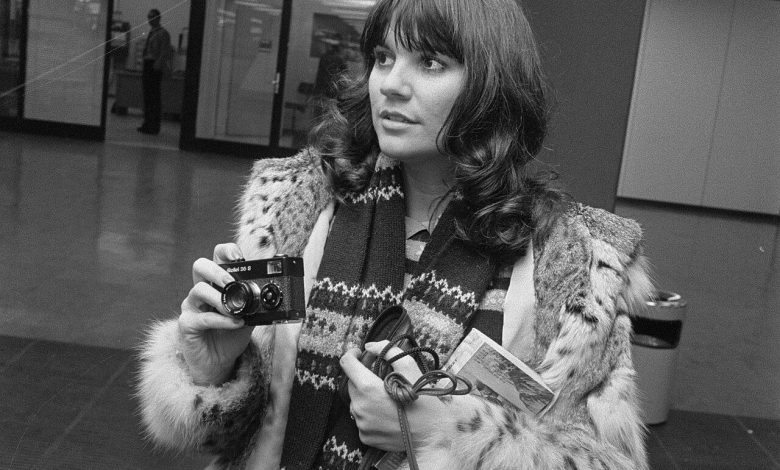

A familiar song became something entirely new
When Linda Ronstadt released “Blue Bayou” in August 1977, she was not simply revisiting an older hit. She was reshaping it. The song had first been written and recorded by Roy Orbison and Joe Melson in 1961, carrying Orbison’s signature loneliness and dreamlike melancholy. Ronstadt kept that emotional core intact, but her version softened the edges and opened the song into a more expansive, more intimate space.
What made her recording so striking was its balance. It was polished enough for mainstream pop radio, yet steeped in the ache and plainspoken longing associated with country music. That combination helped turn “Blue Bayou” into an instant classic, one that sounded both deeply traditional and unmistakably contemporary in the late 1970s.
Ronstadt’s “Blue Bayou” did not erase the song’s past; it illuminated it from a different angle, revealing how powerfully country sorrow and pop grace could coexist.
The voice at the center of the record
Ronstadt’s singing is the reason the performance still feels so immediate. Her voice moves through the lyric with a remarkable mix of restraint and release, sounding controlled one moment and heartbreakingly exposed the next. She does not overdramatize the song. Instead, she lets the yearning accumulate line by line, so that the dream of returning to Blue Bayou feels less like a destination than an emotional state just out of reach.
That vocal vulnerability was one of Ronstadt’s great gifts as an interpreter. She could inhabit a song without making it seem overworked. On “Blue Bayou,” she turned nostalgia into something tactile: warm Southern imagery, distant water, a sense of home imagined through loneliness. The result was haunting, but never heavy-handed.
A crossover moment with real impact
The success of “Blue Bayou” mattered because it showed just how fluid American popular music could be in 1977. Ronstadt’s version reached No. 3 on the Billboard Hot 100 and topped the Adult Contemporary chart, a sign that the song connected across formats and audiences. It was not confined to one lane. Pop listeners heard elegance and melody; country listeners heard emotional truth and familiar phrasing.
That kind of crossover was not new in absolute terms, but Ronstadt helped refine it for a new era. Her recording suggested that country feeling did not need to be rough-edged to be authentic, and that pop production did not have to flatten a song’s sadness. “Blue Bayou” helped make that middle ground feel rich, sophisticated, and commercially undeniable.
Why the arrangement lingers in the memory
Part of the record’s staying power comes from its lush atmosphere. The arrangement gives the song room to breathe, surrounding Ronstadt’s vocal with a gentle glow rather than crowding it. Everything serves the mood: the slow drift of the rhythm, the smoothness of the instrumentation, the sense that the song is floating somewhere between reverie and regret.
That sonic elegance was crucial to its crossover appeal. Ronstadt and her collaborators understood that sentiment alone would not be enough; the sound had to carry listeners into the song’s emotional landscape. “Blue Bayou” feels cinematic without becoming grandiose, intimate without becoming small. It is a careful piece of emotional engineering that never sounds calculated.
Ronstadt as interpreter, not just star
By the time “Blue Bayou” arrived, Ronstadt had already built a reputation as one of American music’s great interpreters, an artist able to move between styles while preserving her own identity. Her genius was not merely in choosing strong material, but in understanding how to reveal new shades within familiar songs. “Blue Bayou” is one of the clearest examples of that talent.
She did not approach Orbison’s song as a museum piece. She treated it as living material, something that could bear a new voice, a new era, and a new audience. In doing so, she reinforced an essential truth about popular music: interpretation can be every bit as transformative as authorship.
The legacy of “Blue Bayou”
Nearly half a century later, Ronstadt’s version remains one of the defining recordings of her career and one of the most evocative pop-country performances of the 1970s. Its emotional clarity, commercial reach, and stylistic confidence helped cement her status as a singular figure in American music. For many listeners, her “Blue Bayou” is now the definitive version, or at least the one that first made the song feel unforgettable.
Its legacy also extends beyond Ronstadt herself. The recording stands as a model for how crossover music can work at its best: not by diluting genres, but by allowing them to speak to one another. In that sense, “Blue Bayou” was more than a hit. It was a statement about what pop and country could become when joined by taste, vulnerability, and a truly exceptional voice.


Quick Facts
- Song: “Blue Bayou”
- Artist: Linda Ronstadt
- Released: August 1977
- Writers: Roy Orbison and Joe Melson
- Billboard Hot 100 peak: No. 3
- Adult Contemporary: Reached No. 1
Image credits: Rob Bogaerts / Anefo / Wikimedia Commons / CC0; Eric Frommer / Wikimedia Commons / CC BY-SA 2.0; Rob Bogaerts for Anefo / Wikimedia Commons / CC0.