My Neighbor Washed Her Car for the Sixth Time, Letting Soapy Water Run Onto My Property – This Time, I Was Ready
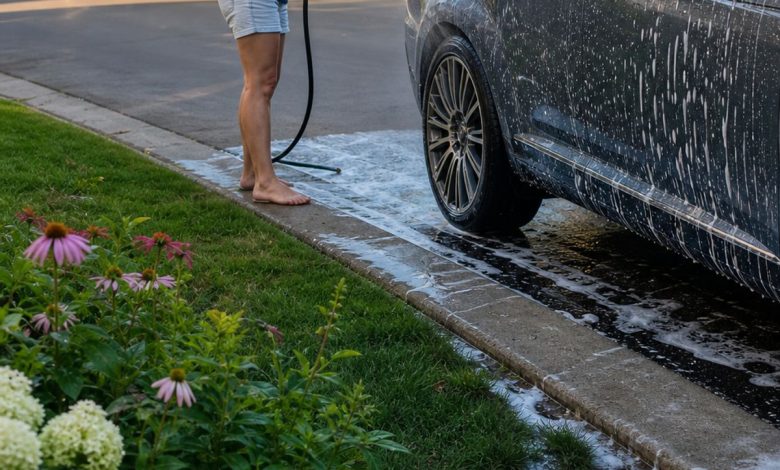
For six Saturdays, my neighbor ignored one simple request about something my late mother had left behind. On the sixth, she was waiting for me, and what she said finally revealed why my wishes had mattered so little.
“I was actually hoping I’d catch you,” Danielle said. “There’s something I need to talk to you about.”
I stopped several feet from her luxury SUV.
Soap was already sliding past the curb and spreading toward my hydrangeas.
“Then turn off the water first.”
Her smile faded.
She glanced at the hose.
“I already did.”
“The water is still running down the street.”
Danielle looked at the white foam gathering near the first plant, then back at me.
“Marianne, this is actually what I wanted to discuss.”
I folded my arms.
“Go ahead.”
We had been doing this for six Saturdays.
My mother had planted those hydrangeas along my front walk the summer before she got sick.
She’d spent an entire afternoon choosing where each one should go.
“Not too close together,” she’d told me. “Give them room to become what they’re going to become.”
At the time, I’d laughed.
Mom could make planting flowers sound like raising children.
She’d been gone for two years.
I watered the hydrangeas every Sunday morning.
Then Danielle started washing her car at the curb.
The first Saturday, I’d gone outside in my slippers.
“Hey, would you mind pulling up onto your driveway? It’s all running into my bed.”
“Oh, yeah, no, sorry.” She’d waved the hose vaguely. “It’s just soap.”
She didn’t move.
The second Saturday, I asked again.
She promised she’d move next time.
The third Saturday, I brought it up at the mailboxes.
Danielle laughed.
“Honestly? You should be thanking me. Free watering.”
I told her it wasn’t water.
It was detergent, and those plants were my mother’s.
“Marianne. They’re flowers. They’re not going to melt.”
By the fourth Saturday, she wore headphones.
I stood on my grass where she could see me.
Danielle gave me a thumbs-up without taking them out.
On the fifth Saturday, I didn’t walk over.
I stood at the end of my driveway with my coffee and watched her run the hose for 20 minutes.
She waved at me with a big smile and lifted two fingers from the nozzle.
After that, I started waking before 8:00 A.M. on Saturdays without meaning to.
I’d lie there listening for the tap.
On the sixth Saturday, it came on at 8:41 A.M.
I got dressed properly this time and even put on real shoes.
I didn’t know why that mattered, but it did.
By the time I walked outside, Danielle was halfway down the passenger side.
Foam had already crossed the curb.
She saw me coming and shut the water off with her thumb before I said anything.
Then she set the nozzle on the hood and told me she’d been hoping to catch me.
Now I waited.
Danielle rubbed her hands together.
“I’ve been meaning to mention that the neighborhood garden committee is doing its summer judging next weekend.”
I stared at her.
“What does that have to do with me?”

“Your front bed.”
“My hydrangeas?”
“Yes.”
She hesitated.
“I nominated your yard.”
For a moment, I genuinely thought I’d heard her wrong.
“You did what?”
“It’s not a big deal.”
“You nominated my flowers for something?”
“Your whole front yard, technically.”
I looked at the soap around my mother’s hydrangeas.
Then I looked at her.
“You’ve spent six weeks washing detergent into the flower bed you nominated?”
Danielle’s face tightened.
“It’s biodegradable.”
“That’s not the point.”
“Then what is the point?”
“The point is that I’ve asked you five times to stop.”
A garage door across the street began opening.
Danielle glanced toward it.
“Could we not turn this into a neighborhood performance?”
That almost made me laugh.
“You brought up a neighborhood competition.”
“It’s not a competition exactly.”
“What is it?”
She sighed.
“There’s recognition, a little sign for the yard, and a feature in the community newsletter.”
“Then take my name out.”
Danielle blinked.
“What?”
“I don’t want to participate.”
“Why wouldn’t you?”
“Because I don’t.”
She looked genuinely annoyed.
“I already submitted it.”
“Without asking me.”
“I thought you’d be pleased.”
I looked toward the hydrangeas.
One of the bushes closest to the curb had begun developing brown edges on several leaves.
I’d noticed them earlier that week.
I’d spent Thursday evening searching for possible causes and checking the soil.
Now I crouched beside the plant.
Danielle sighed behind me.
“You’re doing this again.”
I straightened.
“Doing what?”
“Making those flowers into something they’re not.”
The words hit me harder than I expected.
“What are they, Danielle?”
“Plants.”
“Yes.”
“Plants die. Plants get replaced.”
I stared at her.
She seemed to realize she’d gone too far.

“That’s not what I meant.”
“It sounded pretty clear.”
“Marianne, I’m trying to do something nice for you.”
“By ignoring me?”
Her mouth tightened.
“Fine. Forget I said anything.”
She picked up the hose.
“Don’t.”
Danielle froze.
“Don’t what?”
“Don’t start washing the car again.”
“This is public curb space.”
“Your water is running onto my property.”
She dropped the nozzle.
“Then complain to someone.”
The garage across the street was fully open now.
Our neighbor stepped outside carrying a recycling bin.
He glanced toward us, clearly hearing enough to know something was wrong.
I hated public arguments.
Danielle knew that.
Maybe that was why she smiled again.
“Anything else?”
I looked at her car, the hose, and the foamy water collecting near the curb.
Then I looked at the hydrangeas.
“Yes.”
Her eyebrows lifted.
“I’m going to take your advice.”
“What advice?”
“I’m going to complain to someone.”
Her smile disappeared.
I went inside.
For the first time in six Saturdays, Danielle didn’t finish washing her car.
Later that morning, I photographed the runoff and the browning leaves.
I also emailed the garden committee.
I didn’t accuse Danielle of anything dramatic.
I simply asked to withdraw my property from consideration because I’d never agreed to be nominated.
Then I explained why.
The reply came that afternoon.
They apologized.
They also asked if someone from the committee could stop by the following morning.
I almost said no.
Then I looked through the front window at the hydrangeas.
“All right, Mom,” I whispered. “Apparently, we’re making this a neighborhood performance.”
The next morning, a woman from the committee inspected the bed.
She asked about my watering schedule, the browning leaves, and the runoff.
Then she asked who had nominated me.
“My neighbor.”
She looked toward Danielle’s house.
“The one washing her vehicle there?”
“Every Saturday.”
The woman frowned.
“That’s interesting.”
“Why?”
She closed her notebook.

“Because Danielle isn’t just participating in the garden program.”
I waited.
“She’s chairing it.”
I stared at her.
“Danielle?”
“Yes.”
Suddenly, six Saturdays of smiles, excuses, and ignored requests felt different.
It wasn’t criminal or mysterious.
It was simply unbelievably hypocritical.
The woman glanced at the damaged leaves.
“She nominated your yard herself.”
“She told me.”
“What she apparently didn’t tell you is that the committee uses nominated properties in its neighborhood beautification presentation.”
I felt my stomach tighten.
“What presentation?”
“For the homeowners’ meeting next Saturday.”
She looked at me carefully.
“Danielle is presenting it.”
“Was she allowed to nominate my yard without asking me?”
“No. The person submitting a nomination is supposed to have the homeowner’s permission.”
I stared toward Danielle’s house.
“Then she never had mine.”
The woman nodded.
“I’ll make sure that’s documented.”
That was when I understood.
My mother’s flowers weren’t simply flowers to Danielle.
They were going to be part of her presentation.
And she had never bothered to ask me.
“Then remove my house,” I said.
“We will.”
The committee member looked at the hydrangeas again.
“And I’ll document why.”
That mattered more than I expected.
For six weeks, Danielle had made me feel ridiculous for caring.
Now someone else had looked at the same situation and confirmed that my request had been reasonable all along.
The following Saturday, I woke before 8:00 A.M. again.
This time, there was no sound of running water.
At 8:41 A.M., I was sitting at my kitchen table with coffee.
The street remained quiet.
I smiled.
That afternoon was the homeowners’ meeting.
I hadn’t planned to attend.
Then an email from the garden committee arrived confirming that my property had been removed from Danielle’s presentation.
At the bottom was one additional sentence.
They invited me to come.
So I did.
The meeting was held in the community room near the entrance to our neighborhood.
About 30 people showed up.
Danielle stood near the front beside a display board filled with photographs of lawns, flower beds, and porches.
She saw me walk in.
Her expression changed immediately.
“Marianne.”
“Danielle.”
She stepped toward me.

“What are you doing here?”
“Attending the homeowners’ meeting.”
“I can see that.”
Her voice dropped.
“You contacted the committee.”
“You told me to complain to someone.”
“I didn’t mean…”
“I know.”
For once, I smiled first.
The meeting began.
Danielle took her place at the front.
She spoke confidently about neighborhood pride, maintaining shared spaces, and respecting the appearance of other people’s properties.
I almost admired her ability to say it with a straight face.
Then the garden committee member stood.
“Before we continue, we need to address a concern about this year’s program.”
Danielle stiffened.
The room quieted.
The woman explained that a nominated property had been included without the homeowner’s permission.
She didn’t name me immediately.
She didn’t need to.
Danielle was already staring at me.
“We also learned,” the woman continued, “that repeated activity by the person who submitted that nomination may have contributed to damage in the same garden.”
A murmur moved through the room.
Danielle stood.
“I think ‘damage’ is overstating it.”
The committee member looked at her.
“Danielle, please let me finish.”
Danielle sat down.
Her face reddened.
“The purpose of this program is neighborhood beautification,” the woman continued. “That includes respecting residents and their property. We cannot celebrate a garden while disregarding the homeowner responsible for it.”
Several people nodded.
Then she looked at me.
“Marianne, would you like to say anything?”
Every instinct told me no.
I wasn’t someone who enjoyed speaking in front of 30 neighbors.
Then I remembered standing in slippers on my lawn during that first Saturday.
I remembered the thumbs-up, the wave, and her comment about “free watering.”
I stood.
“My mother planted those hydrangeas.”
The room became quiet.
“She planted them the summer before she got sick. She’s been gone two years.”
I swallowed.
“I don’t expect anyone else to feel about those flowers the way I do.”
Danielle looked down.
“But I do expect someone to stop sending detergent into my flower bed after I’ve asked them repeatedly.”
A woman near the back said, “Of course.”
I continued.
“This was never about whether soap makes flowers melt.”
A few people exchanged looks.
“It was about being told, week after week, that something mattered to me and then having that dismissed because it didn’t matter to someone else.”
Danielle finally looked at me.
“All I asked was for her to move her car a few feet.”
I sat down.
There was no applause.

I was glad.
I hadn’t wanted a performance.
I wanted the truth to be visible.
The committee announced that Danielle would step away from chairing the garden program for the rest of the summer.
Another volunteer would handle the presentation.
Danielle didn’t argue.
For the first time since this began, she simply listened.
After the meeting, I headed toward the door.
“Marianne.”
I stopped.
Danielle approached me without her usual smile.
“I owe you an apology.”
“Yes.”
She seemed surprised by my answer.
Then she nodded.
“Yes, I do.”
We stepped outside.
“I liked your hydrangeas,” she said.
I waited.
“I thought they’d make the presentation look good. Your front walk is one of the nicest on the street.”
“Then why didn’t you listen when I said the soap was damaging it?”
She looked embarrassed.
“At first, I honestly didn’t think it mattered.”
“And after I asked again?”
Danielle looked toward the parking lot.
“Then it became about you telling me what to do.”
There it was.
The problem had never really been detergent or flowers.
It had been pride.
“I kept thinking, ‘It’s a curb. She doesn’t own the street.'”
“I never said I did.”
“I know.”
She rubbed her forehead.
“Every time you asked, I got more stubborn.”
“Even after I told you about my mother?”
Her face changed.
“That’s the part I’m most ashamed of.”
I didn’t answer.
“I lost my dad 11 years ago,” she said. “I have a watch of his that nobody else would care about. If somebody treated it like it was replaceable, I’d lose my mind.”
“Then you understand.”
“I do now.”
I appreciated the apology.
But understanding didn’t erase six weeks of disrespect.
“I’m glad you understand,” I said. “But I need something to change.”
“It will.”
“No more washing your car at my curb.”
“No more.”
“And don’t nominate my property for anything without asking.”
“I won’t.”
She nodded toward my house.
“I’d also like to replace anything I damaged.”
I shook my head.
“I don’t want new hydrangeas.”
Her expression fell.

“They’re from my mother.”
“I know.”
“I want to try to save them.”
“Then let me pay for someone who knows how.”
That surprised me.
It didn’t erase what she’d done.
Still, it was the first offer she’d made that was about fixing something instead of winning.
“Alright.”
Two days later, a local gardener inspected the plants.
The damage wasn’t as severe as I’d feared.
The affected leaves needed trimming, and the soil around the curbside plants needed to be flushed carefully over time.
Danielle paid the bill.
More importantly, she stopped washing her car at my curb.
The next Saturday, I woke at 8:16 A.M.
I listened.
There was nothing.
At 8:41 A.M., the street was still quiet.
I rolled over and went back to sleep.
A month later, I was outside deadheading the hydrangeas when Danielle walked over.
She stopped at the edge of my driveway.
“Can I come over?”
The question was so ordinary that it took me a moment to understand why it mattered.
She was asking.
“Sure.”
She walked toward the flower bed but didn’t step into it.
“They look better.”
“They are.”
One of the damaged plants had produced a small cluster of new leaves.
Danielle pointed.
“Is that new?”
“Yes.”
She smiled.
“Good.”
For a moment, we stood there quietly.
Then she said, “I really did think they were beautiful.”
I looked at the row of hydrangeas.
“My mother was proud of them.”
“You must miss her.”
“Every day.”
Danielle nodded.
This time, she didn’t tell me they were only flowers.
She didn’t tell me they’d grow back.
She simply stood beside me.
The following Sunday morning, I carried my watering can outside.
Sunlight had caught the newest blooms, turning the edges almost blue.
I thought about Mom kneeling in that same dirt, insisting that each plant needed enough room to become what it was going to become.
For two years, those flowers had been one of the places where grief still felt close enough to touch.
Danielle hadn’t understood that.
Maybe she hadn’t needed to understand it completely.
She’d only needed to respect that I did.
I watered the last hydrangea and looked toward the curb.
It was dry.
For the first time in weeks, that small thing felt enormous.
But here is the real question: When someone tells you that something matters deeply to them, do you dismiss it because it means nothing to you, or do you respect their boundary because caring about a person sometimes means protecting what they love?
If you enjoyed this story, you’re definitely going to like this one about a young woman who was humiliated by her roommate for being “too poor” to live in their dorm — only for karma to come knocking before she ever had the chance to move in.