The Cruel Sandwich Lie That Followed Cass Elliot for 50 Years
A joke replaced the truth
When Cass Elliot died in London on July 29, 1974, she was 32 years old and had just completed a successful engagement at the London Palladium. The official cause was a heart attack. No food blocked her airway. Yet a false claim that she had choked on a ham sandwich spread almost immediately and followed her name for decades.
The rumor was especially cruel because Elliot had endured relentless public commentary about her body. A ridiculous image became easier for newspapers and comedians to repeat than the medical finding.
Why the false story survived
A sandwich was reportedly present in the room, which allowed speculation to harden into folklore before the autopsy result was widely understood. People close to Elliot also believed that a choking story might protect her young daughter from rumors of drugs. Instead, the invention created a humiliating legend with a life of its own.
In later years, people involved in spreading the account acknowledged that it was false. Elliot’s daughter, Owen Elliot-Kugell, has worked to replace what she calls the stupid sandwich story with a fuller understanding of her mother.
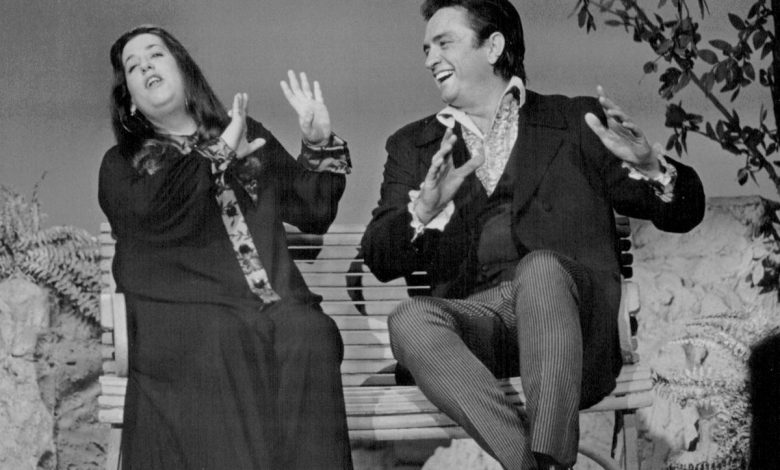
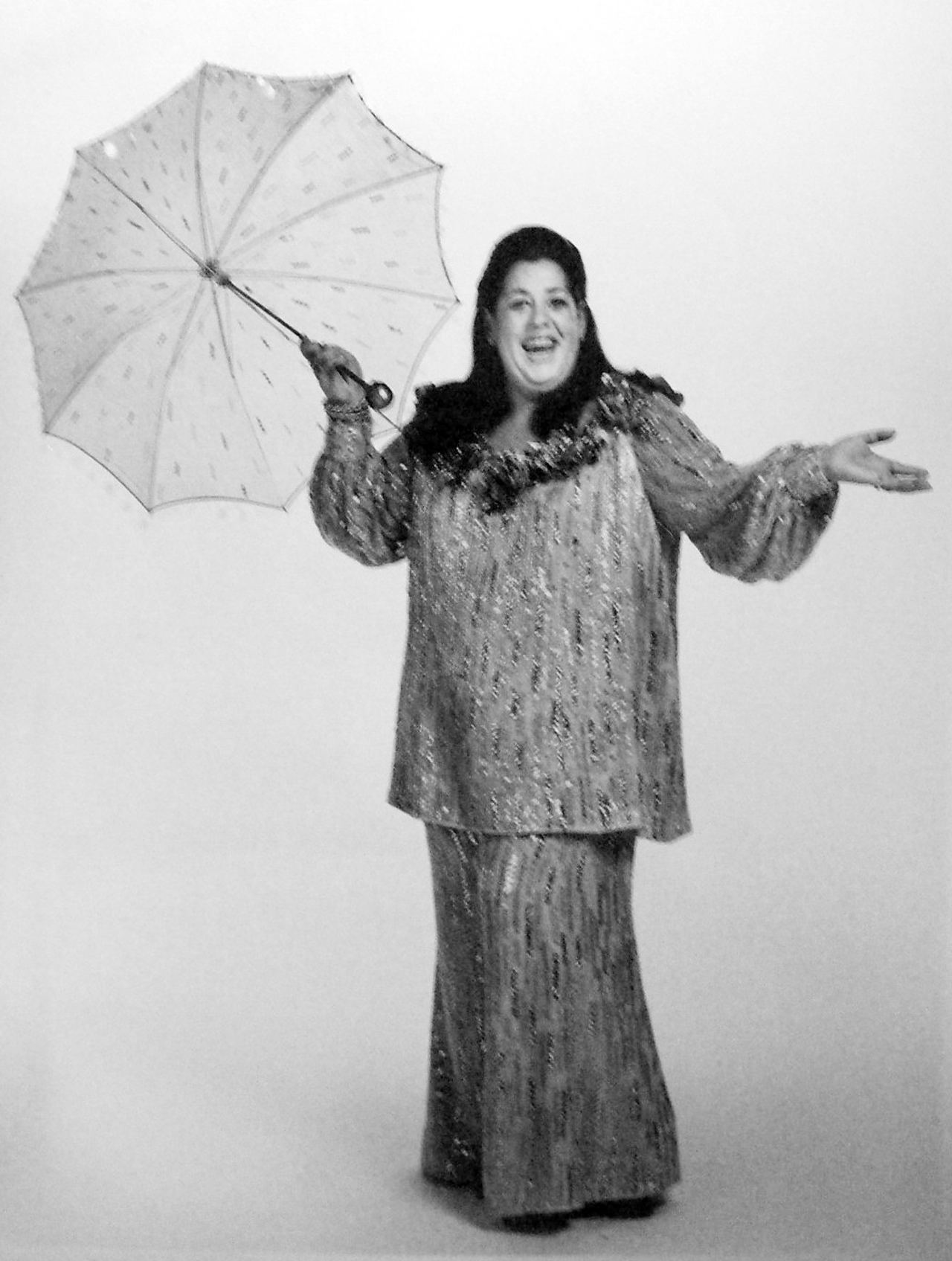
Cass Elliot. Photo: CBS Television. Public domain.
The correction changes what we remember
Cass Elliot was not a punch line. She was the immense, agile voice at the heart of The Mamas & the Papas, a successful solo performer and a woman pushing against an industry that wanted to define how a female star should look. She sang California Dreamin’, Dream a Little Dream of Me and Make Your Own Kind of Music with warmth that remains instantly recognizable.
Correcting the manner of her death is not a minor piece of trivia. It returns dignity to a person whose body was used to eclipse her work. The truth is simpler and sadder: after reaching a professional high in London, Cass Elliot died in her sleep from heart failure. The music—not a sandwich—should be the image that endures.
Scotty Moore and Bill Black: The Small-Band Chemistry Behind Early Elvis
The Sound Before the Sensation
Before Elvis Presley became the most recognizable performer in American popular music, he was a young singer with a distinctive voice, a guitar, and two Memphis musicians who understood how to make space around him.
Guitarist Scotty Moore and upright bassist Bill Black formed the instrumental core of the group that became known as the Blue Moon Boys, and their chemistry helped turn Presley’s earliest performances into something more volatile than a conventional country trio.
The arrangement looked modest on paper, with Presley on vocals and rhythm guitar, Moore on lead guitar, and Black handling the upright bass, but the trio created an unusually elastic sound through timing, contrast, and instinct.
Their importance was not simply that they played behind Elvis, because they helped define the musical setting in which his early identity emerged.
Scotty Moore’s Controlled Electricity
Scotty Moore brought a country guitarist’s discipline to the sessions, but his playing also carried the influence of blues, swing, and the developing electric-guitar language of postwar American music.
Moore’s lines rarely crowded the vocal, yet they could suddenly cut through the arrangement with a sharp response, a bending note, or a compact phrase that made the song feel more dangerous.
His role was often one of precise reaction, as he listened closely to Presley and answered the singer rather than treating the guitar as a separate attraction.
That approach gave the early recordings a conversational quality, with Elvis stating an idea and Moore reinforcing, challenging, or redirecting it from the other side of the rhythm.
Moore also understood the power of restraint, because a short guitar figure could create as much tension as a long solo when the surrounding performance stayed taut.
On the early Sun recordings, his electric guitar helped connect country music’s clean melodic vocabulary with the rougher textures of blues and rhythm and blues.
Bill Black’s Physical Pulse
Bill Black supplied a different kind of energy through the upright bass, an instrument he played with an aggressive slap technique that made the rhythm audible as both pitch and percussion.
His bass lines did more than mark the bottom of the beat, since the popping strings and forceful accents gave the trio a physical bounce that listeners could feel immediately.
Black’s sound was especially important because the group did not depend on a large rhythm section to create momentum.
The bass had to carry weight, movement, and attitude, and Black’s playing made the trio sound bigger than its lineup suggested.
His humor and stage presence also became part of the band’s early identity, although the musical contribution remained the foundation of his importance.
When Black pushed the beat forward, Moore could play more freely above it, and Elvis could shape his vocal phrasing around a rhythm that felt both grounded and unsettled.
The Session That Changed Everything
The trio’s breakthrough came in 1954 at Sun Records in Memphis, where producer Sam Phillips was searching for a performer who could bring the emotional directness of Black music to a broader audience.
During the session that produced “That’s All Right,” Presley, Moore, and Black found an approach that did not sound like a polished attempt to imitate one established genre.
The recording drew from blues and country traditions while allowing Elvis’s vocal phrasing, Moore’s guitar, and Black’s slap bass to collide in a compact, propulsive performance.
The result sounded spontaneous because the musicians responded to one another in real time, but that spontaneity rested on professional listening and a shared sense of where the song could go.
The song’s release paired it with “Blue Moon of Kentucky,” a country standard that the trio reshaped with a faster, more rhythmic feel.
That pairing presented the group as a musical argument in miniature, with one side emphasizing blues-inflected urgency and the other revealing how boldly the musicians could transform a familiar country song.
Chemistry on the Road
The Blue Moon Boys’ sound became even more effective in live settings, where the trio had to hold an audience’s attention without the elaborate production associated with later Presley performances.
Moore’s guitar could answer Elvis’s movements, Black could drive the rhythm with visible intensity, and Presley could move between country phrasing, blues feeling, and an increasingly dramatic stage presence.
Their compact format left room for risk, because every change in tempo, vocal emphasis, or instrumental attack was exposed.
That openness helped make the performances exciting, but it also meant that the musicians had to trust one another completely.
Moore’s steady musicianship gave Presley room to experiment, while Black’s forceful bass kept the performance from losing its center.
The balance was delicate, since too much polish would have weakened the raw quality and too much disorder would have blurred the songs’ shape.
Why the Trio Still Matters
Presley eventually became associated with large touring bands, elaborate stage productions, and a catalog that reached across several eras of American popular music.
Those later settings were important to his career, but they can obscure how much his first breakthrough depended on the sound of three musicians working with minimal equipment and maximum responsiveness.
Moore and Black helped establish the principle that would remain central to early rock and roll, namely that a small group could create a large emotional impact through rhythm, attitude, and carefully balanced tension.
Their playing also demonstrated that musical innovation does not always require complicated arrangements.
Sometimes the decisive change comes from the way familiar elements are combined, as country guitar, blues feeling, an upright bass, and a singular voice became something newly confrontational.
Moore’s guitar and Black’s bass gave Elvis a framework strong enough to support his individuality without overwhelming it.
The Legacy Behind Early Elvis
Scotty Moore and Bill Black were not interchangeable parts in an Elvis Presley backing band, because each supplied a distinct musical personality that made the trio work.
Moore offered clarity, color, and controlled surprise, while Black provided weight, motion, and a percussive punch that made the performances feel immediate.
Together, they helped turn Presley’s earliest recordings into documents of collaboration rather than simple showcases for a future star.
The history of rock and roll often focuses on the singer at the microphone, but early Elvis depended on the musicians standing beside him.
The Blue Moon Boys showed how much a small band could accomplish when every note served the same restless purpose.
Their chemistry gave Presley the space to sound unlike anyone else, and that achievement remains one of the essential foundations of his rise.
Read more stories
- Amazon Air Cargo Plane Overruns Miami Airport Runway — Responder's Words Captured on Audio Leave Many Shaken
- Teriyaki Chicken Casserole
- My Husband Had an Affair with My Sister While I Cared for His Ill Mother – After the Funeral, We Divorced and They Got Engaged, but Days Later, He Yelled, ‘You Knew from the Beginning That My Mother Would Do This!’
- The Fleetwood Mac Song That Turned a Broken Relationship Into Rock History