The Dark Truth Behind Johnny Cash and His 1955 Legendary Anthem


A Voice That Didn’t Sound Like the 1950s
In 1955, popular music was speeding toward brighter, louder thrills. Rock ’n’ roll was beginning to shake loose from the old order, jukeboxes were filling with songs built for movement, and the young stars of the day often sold excitement first. Johnny Cash arrived with something stranger: restraint, severity, and a voice that seemed older than his years.
That contrast is part of why his early breakthrough has never really faded. Cash did not sound like an entertainer trying to charm a room. He sounded like a witness. The famous baritone—often described as dark, steady, and implacable—carried a weight that made even a simple lyric feel like testimony. In the Sun Records setting, with little ornament and plenty of empty space around him, that effect became unforgettable.
Johnny Cash’s early records did not beg for attention; they commanded it by sounding as if they had already survived something.
Inside Sun Records, Minimalism Became Myth
The legend of Sun Records usually comes wrapped in motion: young musicians, hot tape, nervous ambition, lightning in a small room. Cash fit that mythology, but his records also pushed against it. Where others leaned into swing and swagger, he and his band favored a clipped, skeletal pulse—guitar, rhythm, and that famously spare “boom-chicka-boom” drive.
That economy mattered. Cash’s 1955 anthem was not powerful because it was lavish; it was powerful because almost nothing distracted from the moral force at its center. In the modest studio environment, every sound had a job to do. The result was a recording that felt intimate and severe at once, as if the listener had wandered into a confession delivered under bare light.
Sun Records helped shape the atmosphere, but Cash supplied the emotional architecture. He understood, instinctively, that darkness lands harder when it is delivered plainly. No theatrical overreaching was necessary. The song’s menace and sorrow came from directness.
The Song at the Center: Crime, Conscience, and the American Shadow
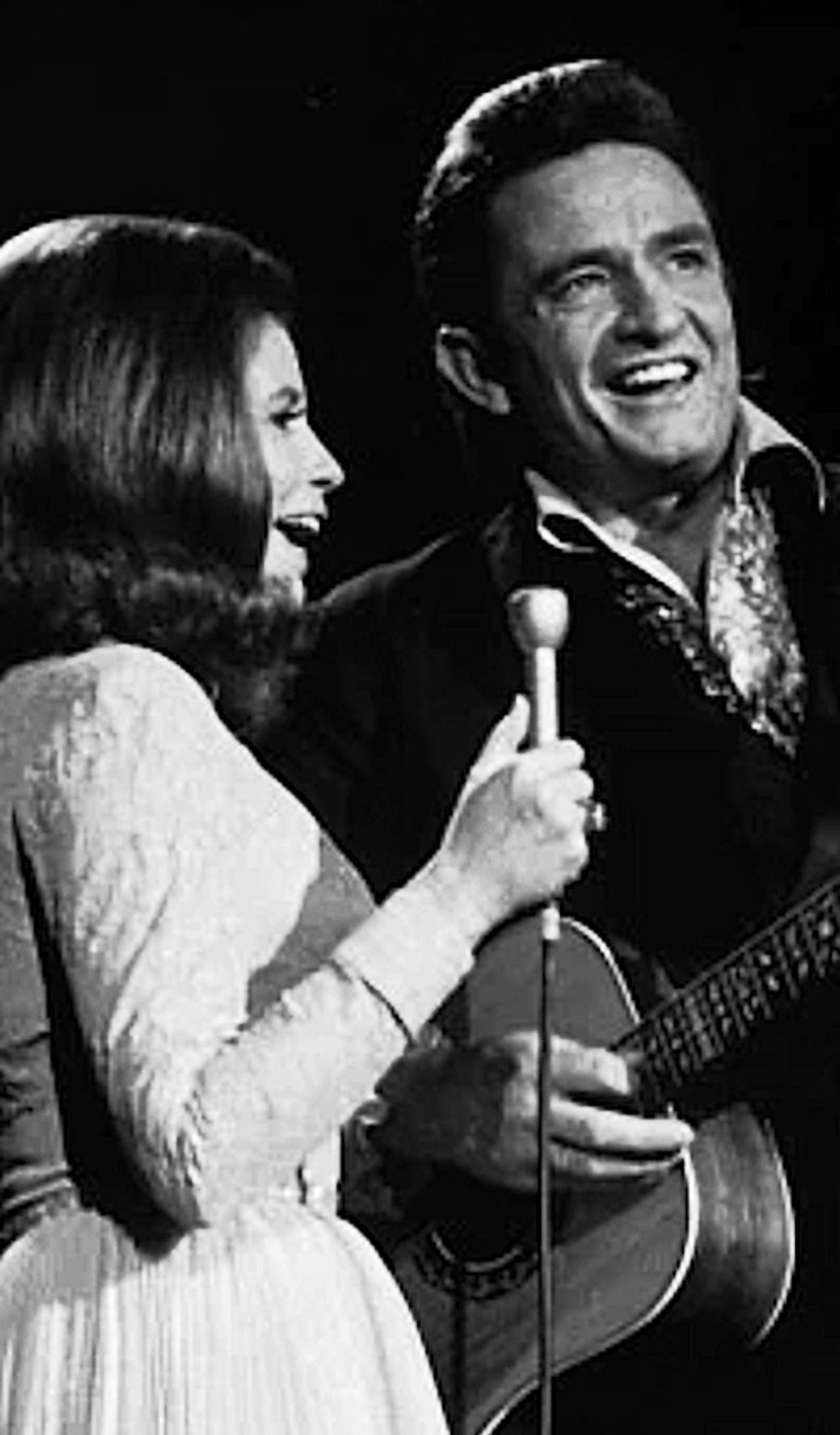
The 1955 Cash anthem most closely tied to this image is Folsom Prison Blues, a song that has endured not merely as a country standard or a rockabilly artifact, but as a piece of American folklore. Its opening lines are among the most instantly recognizable in popular music, and they still shock because of their bluntness. Cash did not approach violence and guilt as abstract themes. He put them in a human mouth.
That is the dark truth behind the record’s staying power: it dares to inhabit a damaged mind without excusing it. The narrator is imprisoned, haunted, and cut off from the freedom he can almost hear passing by. The train in the song is more than scenery. It is movement, escape, ordinary life—everything the prisoner no longer has. Cash turns that contrast into emotional torment.
What makes the song feel larger than a period hit is its refusal to soften consequence. There is no neat moral lecture, but there is no evasion either. Regret hangs over every line. That tension—between brutality, punishment, longing, and the dream of redemption—gave the record a psychological depth that many of its contemporaries never attempted.
Why the Darkness Felt Authentic
Cash’s authority came in part from biography, but also from persona. Even early on, he projected an unusual seriousness. He drew from gospel, folk, country, and the stark storytelling tradition that ran through Southern and rural music. He understood that songs about sin, judgment, and mercy were not side themes in American life; they were central ones.
That grounding helps explain why his bleakest material never felt like costume drama. Cash could sing about prisoners, drifters, temptation, and spiritual conflict because he treated those figures as part of the same moral landscape as church hymns and family memory. The darkness in his music was rarely decorative. It was bound up with conscience.
Listeners responded because the song recognized something unsettling and familiar: that American popular music could hold not just pleasure and rebellion, but also shame, violence, loneliness, and the possibility—never guaranteed—of grace. Cash made room for all of it.
From Hit Record to Enduring Myth
Over time, the anthem’s reputation only grew. It survived changes in format, taste, and generation because it was built on archetypes that do not age easily: the prisoner, the train, the restless conscience, the distant promise of release. Even people who know little else about 1950s recording history tend to recognize the song’s atmosphere immediately.
Cash’s later career deepened the myth around it. As his image evolved into that of a national troubadour of outcasts and strugglers, the early Sun recording came to seem almost prophetic. It already contained the themes he would carry for decades: empathy for the condemned, fascination with moral failure, and an unblinking stare into human frailty.
That is why the song still feels haunting rather than merely nostalgic. It is not preserved by retro charm alone. It endures because it names impulses and fears that remain current, and because Cash’s performance never sounds trapped in a museum. It still sounds alive, dangerous, and sorrowful.
The Real Legacy of the 1955 Anthem
To call the song legendary is easy; to explain why is harder. Its greatness lies not only in melody or image, but in its emotional design. Cash understood that a song can be simple and still carry enormous moral pressure. He made silence, repetition, and understatement do the work that other artists might have assigned to spectacle.
The dark truth, then, is not a scandal hidden behind the record. It is the song’s core insight: people are capable of terrible acts, and they must live with the echo. Cash transformed that grim idea into popular art without draining it of discomfort. That was radical in 1955, and it remains powerful now.
In a decade often remembered for chrome, optimism, and teenage release, Johnny Cash cut through with a voice that suggested another America entirely—lonelier, rougher, more burdened by sin and memory. That is the world his anthem captured, and that is why it still grips the soul today.

Quick Facts
- Artist: Johnny Cash
- Likely anthem referenced: Folsom Prison Blues
- Recording era: 1955 Sun Records period
- Signature quality: Sparse, dark, morally charged storytelling
- Enduring themes: Crime, regret, punishment, redemption
Image credits: Sun Records / Wikimedia Commons / Public domain; Johnny Cash Promotional Photo for Sun Records, taken in 1955 / Wikimedia Commons / Public domain; Columbia Records / Wikimedia Commons / Public domain.