The Highwaymen’s “Living Legend”: When Four Country Giants Sang Their Own Myth Into Being
A title that arrives with its own mythology
Some songs announce themselves before the first line is sung, and “Living Legend” is one of them. Even in title alone, it suggests memory, endurance, reputation, and the strange burden of being known long before the story is over. In the hands of The Highwaymen, that phrase lands with unusual force, because it is impossible to hear it without also hearing the biographies behind the voices.
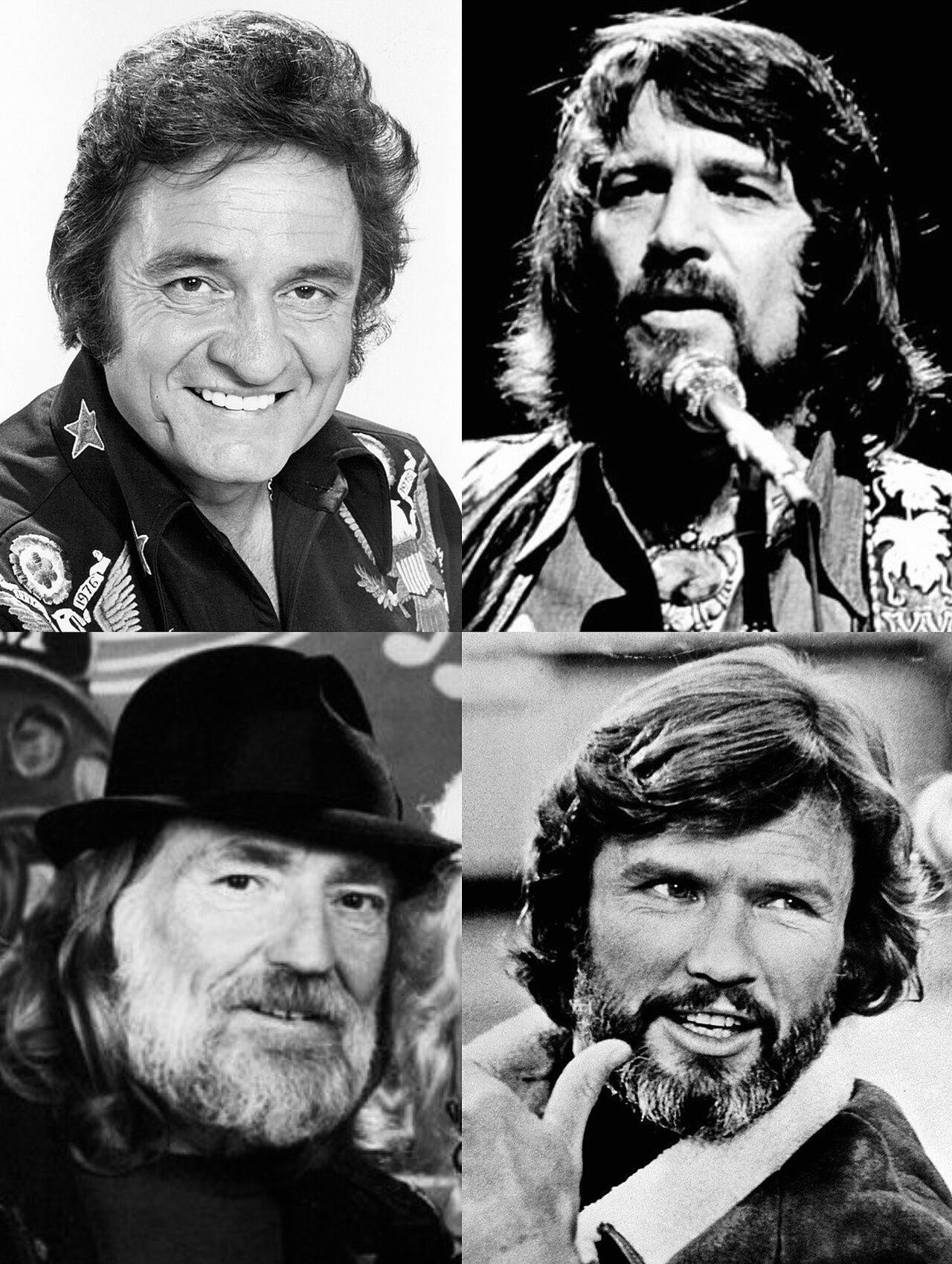
By the time Johnny Cash, Waylon Jennings, Willie Nelson, and Kris Kristofferson recorded together as The Highwaymen, each man already carried an unmistakable public image. Cash brought the gravity and moral thunder of a national folk hero. Jennings had the defiant edge of outlaw country. Nelson embodied a loose, wandering independence that somehow felt both intimate and epic. Kristofferson added the writer’s eye, the reflective intelligence, the sense that every line might open into a larger meditation on freedom, regret, or faith.
The Highwaymen were more than a supergroup; they were four fully formed legends testing what would happen when myth met harmony.
More than a supergroup
The term “supergroup” can sound tidy, almost promotional, but it barely contains what The Highwaymen represented. This was not a temporary all-star jam built on novelty. It was a gathering of artists whose voices were already embedded in American music, and whose careers had helped define country’s restless, rough-edged alternative to polish and convention.
What made the quartet so compelling was not uniformity but contrast. Cash’s baritone could sound like carved wood and dark earth. Jennings’ phrasing pushed against the beat with biker cool and hard-earned authority. Nelson sang with elastic timing and conversational tenderness. Kristofferson often sounded like the poet in the room, plainspoken yet searching. Together, they did not smooth one another out; they made each other more recognizable.
Why “Living Legend” feels self-referential
That is why “Living Legend” can seem almost self-aware. The song invites listeners to think about what it means to become symbolic while still being human, to be celebrated and mythologized while still carrying age, memory, and scars. For fans who had followed these men separately for years, the performance can feel like a wink without irony: yes, they knew exactly who they were in the culture, and they knew the audience knew too.
Yet the power of the song lies in the fact that it does not feel merely boastful. The best Highwaymen performances always carried weather in them: roads traveled, losses absorbed, the long view that only comes after decades of singing and surviving. So even when the title sounds grand, the emotional effect is grounded. It is less a chest-thump than a reckoning with stature, time, and the cost of becoming larger than life.
Four careers, one amplified presence
Part of the thrill of The Highwaymen was hearing fame refracted through fellowship. Alone, each member was iconic. Together, they became something like a living mural of outlaw country and American songwriting. Their collective presence did not simply add up; it multiplied. Audiences were not just hearing four stars share a stage. They were hearing entire histories overlap.
That amplification is central to the appeal of “Living Legend.” The song resonates because the group itself embodied the idea. Each singer arrived with his own canon, his own myths, his own relationship to rebellion and reinvention. Put them in a single frame and the result was not clutter but concentration: four distinct legacies reinforcing one another until the very concept of legend felt audible.
The Highwaymen as a symbol of country music’s larger imagination
The quartet also stood for a particular strand of country music: literate but plainspoken, rebellious but deeply traditional, skeptical of polish yet intensely attentive to songcraft. They represented a form of authority that did not come from perfection. It came from conviction, lived experience, and voices that sounded marked by real life rather than insulated from it.
In that sense, “Living Legend” belongs to more than fan nostalgia. It speaks to how country music remembers its giants—not as museum pieces, but as ongoing presences. The Highwaymen made legacy feel active. When they sang together, they were not simply revisiting old glory. They were demonstrating that history can still breathe, joke, ache, and thunder in the present tense.
Why the song still lingers
“Living Legend” endures because it offers listeners two satisfactions at once. It gives the immediate pleasure of hearing four singular voices in one shared statement, and it also deepens with everything the listener already knows about the men singing it. The song is inseparable from biography, charisma, and the cultural memory surrounding The Highwaymen, which makes every listen feel layered.
For longtime admirers, it can sound like confirmation of something they believed all along: that these artists were not only major figures individually, but even more powerful in combination. For newer listeners, it can serve as an entry point into why The Highwaymen mattered in the first place. The song’s title promises grandeur, but the real achievement is subtler and stronger. It lets legend sound human, and humanity sound legendary.
Quick Facts
- Group: The Highwaymen
- Members: Johnny Cash, Waylon Jennings, Willie Nelson, Kris Kristofferson
- Song discussed: “Living Legend”
- Genre context: Country music / outlaw country tradition
- Why it stands out: Its title and performance feel self-referential for a quartet of already iconic artists
Image credits: FBI / Wikimedia Commons / Public domain; Johnny Cash 1977 photo: CBS Television Waylon Jennings 1976 photo: RCA Records Willie Nelson 1985 photo: CBS Television Kris Kristofferson 1978 photo: Magna Artists / Wikimedia Commons / Public domain; Thomas Peckett Prest / Wikimedia Commons / Public domain.