The Exeter boys who wore skirts to beat the heat
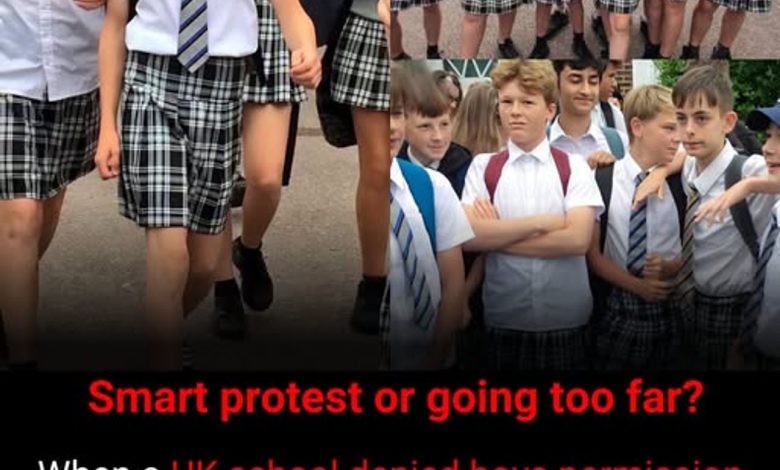
When a fierce June 2017 heatwave settled over the UK, classrooms felt less like places of learning and more like ovens. At Isca Academy in Exeter, a group of boys decided that the standard school uniform was no match for the weather. They asked for permission to wear shorts instead of trousers, hoping for something a little cooler and more bearable as temperatures soared.
The answer they got was no. The school said its uniform rules did not allow boys to wear shorts. But there was a twist in the policy that the students did not let pass by unnoticed: if girls were allowed to wear skirts, the boys were technically allowed to wear them too. What began as a practical request suddenly became the spark for something far more memorable.
More than 30 boys took the school at its word and arrived in skirts as a protest. Some borrowed them from sisters or friends, while others went a step further and shaved their legs before heading in. It was a quietly rebellious gesture, but one that carried a clear message: if the school would not make room for shorts in the heat, then the boys would find another way to make their discomfort visible.
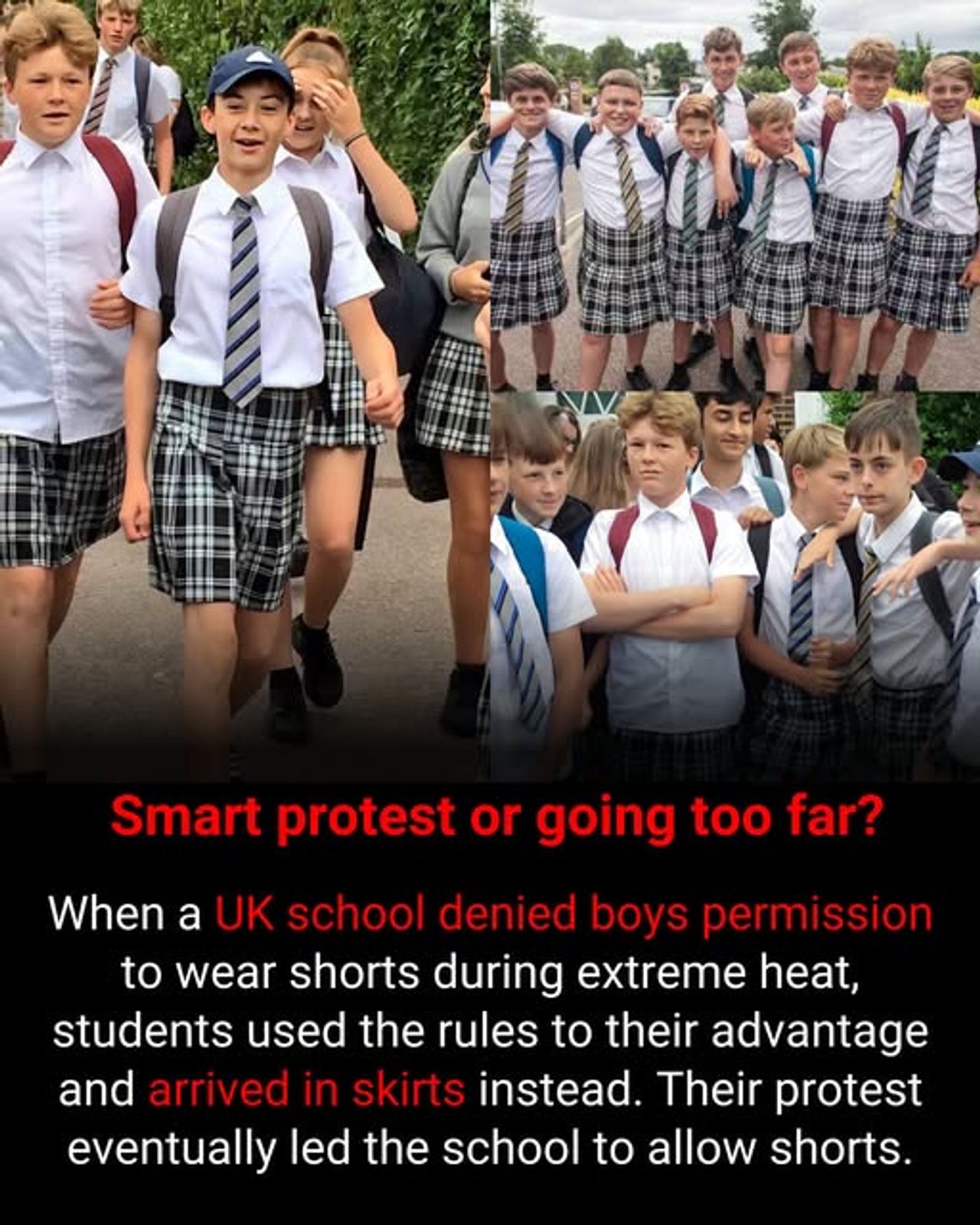
The protest drew attention almost immediately. The school later confirmed that none of the roughly 30 boys involved were punished for taking part. What might have begun as a joke to some became a serious and widely admired example of students pressing for change without disrupting school life in a destructive way.
News of the unusual stand spread far beyond Exeter. International outlets including the BBC, CNN and NPR picked up the story, turning a local uniform dispute into a global talking point. People were struck not just by the sight of boys in skirts, but by the confidence and composure behind the protest itself. It was clever, peaceful and impossible to ignore.
By the end of the week, the school announced that shorts would be added to the uniform from the following year. It said it would not introduce the change immediately, explaining that it did not want to place undue pressure on families. In the meantime, the school relaxed parts of the dress code, allowing students to leave their shirts untucked and loosen their ties during the heatwave.
What stayed with many people, though, was the spirit of the students’ response. Faced with a rule that did not fit the reality of the weather, they found a nonviolent way to make their case and were heard. In the end, the story became more than a uniform dispute. It was a reminder that young people, when they believe something is unfair, can be surprisingly effective at asking for change with courage, wit and a sense of fairness.