When C.S. Lewis Nominated Tolkien for the Nobel Prize
In the book-lined quiet of Oxford, two friends spent years in conversation — over myths, manuscripts, pipe smoke, and pints — building worlds together in the way only devoted readers and writers can. When J.R.R. Tolkien finally completed his vast epic of hobbits, wizards, ancient languages, and a realm called Middle-earth, C.S. Lewis saw more than an imaginative triumph. He saw a work that deserved to stand among the great achievements of literature.
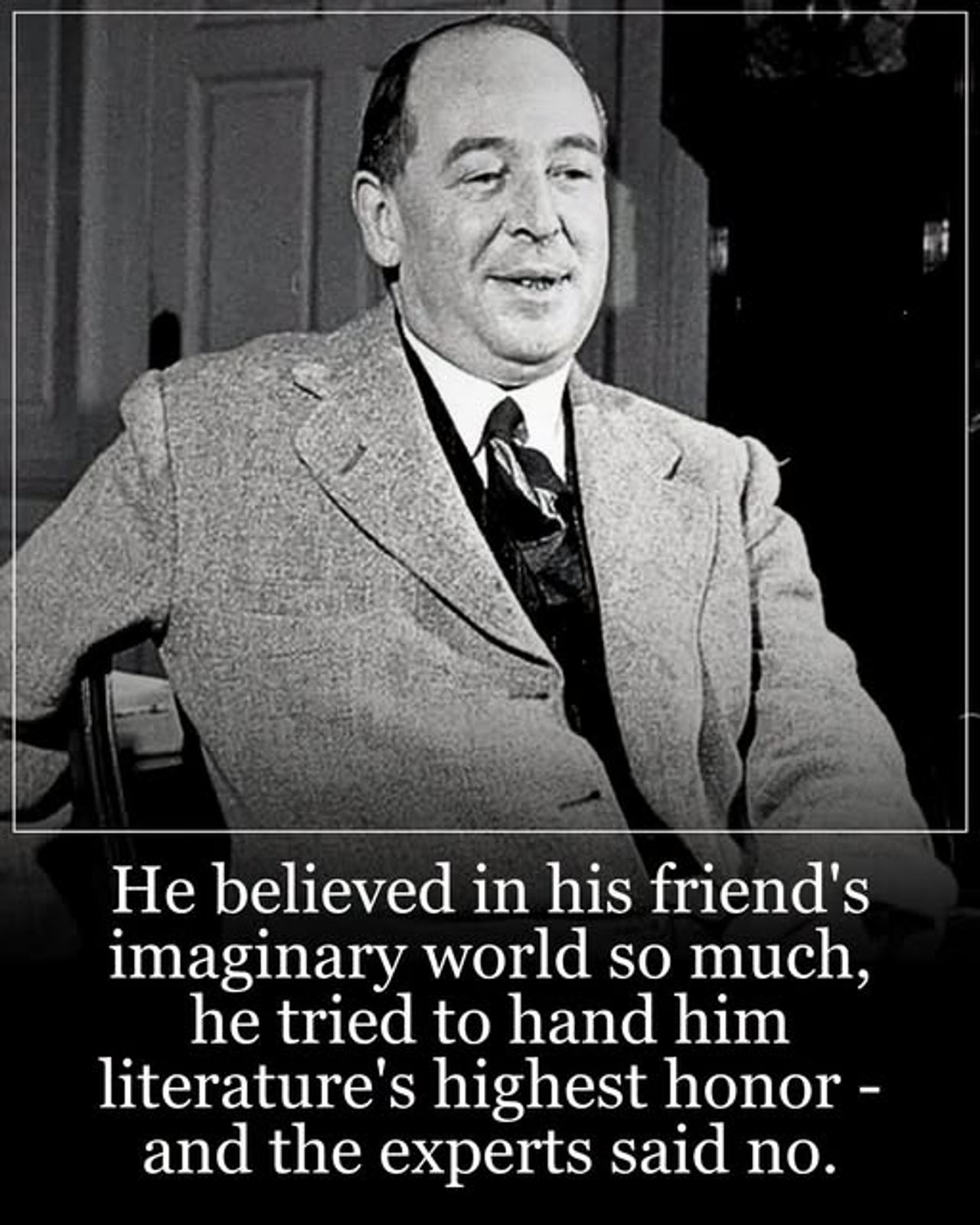
So in 1961, Lewis made a formal move that carried both friendship and conviction: he nominated Tolkien for the Nobel Prize in Literature. It was not a casual nod or an offhand compliment. It was a serious appeal to one of the world’s most respected literary institutions, a clear statement that Tolkien’s work belonged in the highest company.
The answer, however, was no. For years, the reason remained hidden in the sealed archives of the Nobel process. When those records were eventually opened, the dismissive judgment came into view. A member of the jury had written that Tolkien’s writing did not rise to “storytelling of the highest quality.” In that era, sweeping fantasy filled with invented tongues and mythic quests was often treated by gatekeepers as clever diversion rather than serious art.
What Lewis regarded as a masterpiece, the committee viewed as escapism. Tolkien did not win the prize that year, and the honor went instead to another author who has faded from public memory for many readers today. For a time, that seemed to settle the matter — at least on paper.
But books have their own way of outlasting judgments. In the decades that followed, The Lord of the Rings went on to sell well over 150 million copies worldwide. It was translated into dozens of languages, adapted into films that defined an era, and taken seriously in university classrooms where it might once have been dismissed. What had been written off as fantasy became, for millions, a living landscape of courage, loss, friendship, and return.
Entire generations found something deeply personal in Tolkien’s world, especially readers who felt like outsiders and discovered in Middle-earth a place that seemed to understand them. The genre he helped shape now stretches across books, film, and television, with its roots tracing back to the patience and imagination he poured into his pages.
In the end, the Nobel rejection says as much about the moment as it does about the man. Tolkien never needed the committee’s permission to matter. Lewis understood that early, and time proved it. Not every refusal closes the story — some only reveal how long it can take for greatness to be recognized.