The Quiet John Lennon Song That Became a Voice for a World Longing for Peace
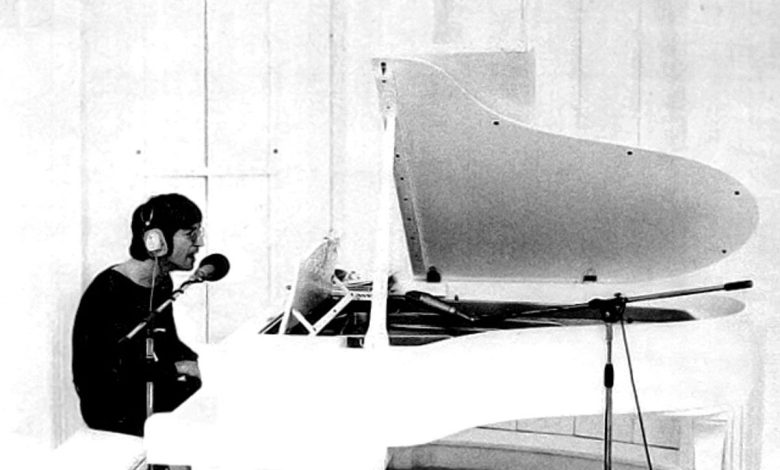
The piano sounds reassuring. What John Lennon asks us to consider is anything but small.
He is not singing about finding the right person or getting back a love he lost. He is asking what life might look like if the divisions people take for granted no longer stood between them.
And he does it without raising his voice.
That contrast is one reason to return to this recording, even if you think you already know every note.
September 9, 2026 marks fifty-five years since the album Imagine was released in the United States. The anniversary belongs to the album; the title song followed as an American single in October.
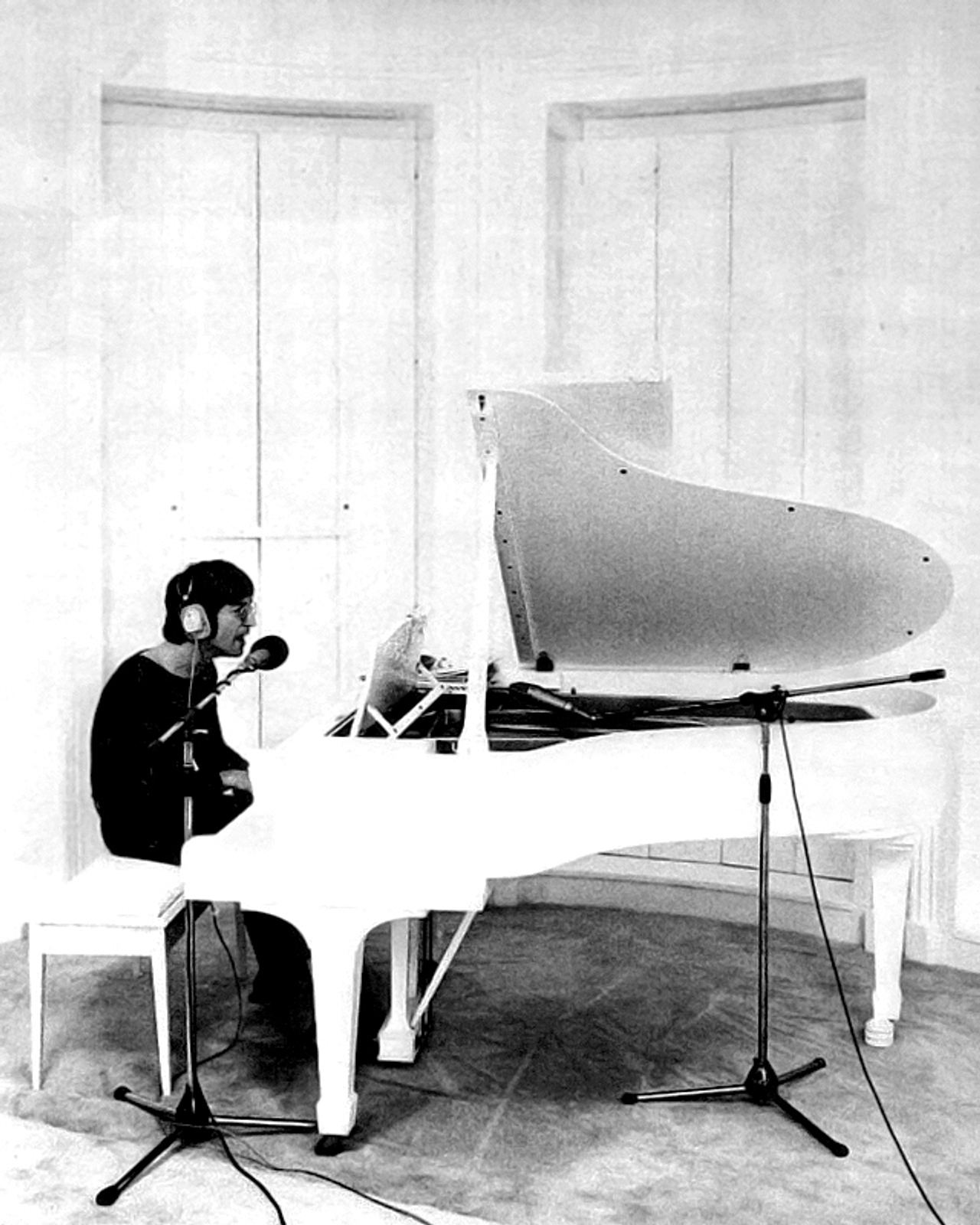
John Lennon at the piano, photographed by Peter Fordham and pictured in a September 1971 advertisement for the album. Via Wikimedia Commons; listed as public domain in the United States.
With a song this familiar, recognition can become a shortcut. The opening piano arrives, a memory surfaces, and we stop listening to what comes next.
Try resisting that shortcut for a few minutes.
The gentleness is not the absence of an argument. Lennon asks listeners to reconsider borders, possessions and religious division. Whether someone accepts that vision or questions it, the distance between the soft delivery and the enormous proposal is worth hearing.
There is also another artist inside the song’s beginnings.
Lennon later acknowledged the influence of Yoko Ono’s book Grapefruit, whose short instruction pieces repeatedly invite the reader to imagine something beyond ordinary experience. He also said her contribution to the lyrics deserved acknowledgment. The official song credits now name both Lennon and Ono.
That background gives the title a different weight. It is an invitation to try an idea, not a claim that the world has already become peaceful.
The recording brings that invitation close. Lennon’s voice and piano sit at the center, with bass, drums and strings supporting rather than overwhelming the melody.
Listen to how little force the vocal needs. The performance leaves room for a listener to disagree, wonder, remember, or simply stay with the sound.
Yoko Ono and John Lennon at the John Sinclair Freedom Rally, December 10, 1971. Photograph from the 1972 Michiganensian, via Wikimedia Commons; listed as public domain in the United States. This is a separate event, not the filming of the song’s piano video.
For some people, this song carries the memory of a parent, an old record player, or the person who first introduced them to Lennon. For others, it arrives without those memories and still offers a moment of quiet.
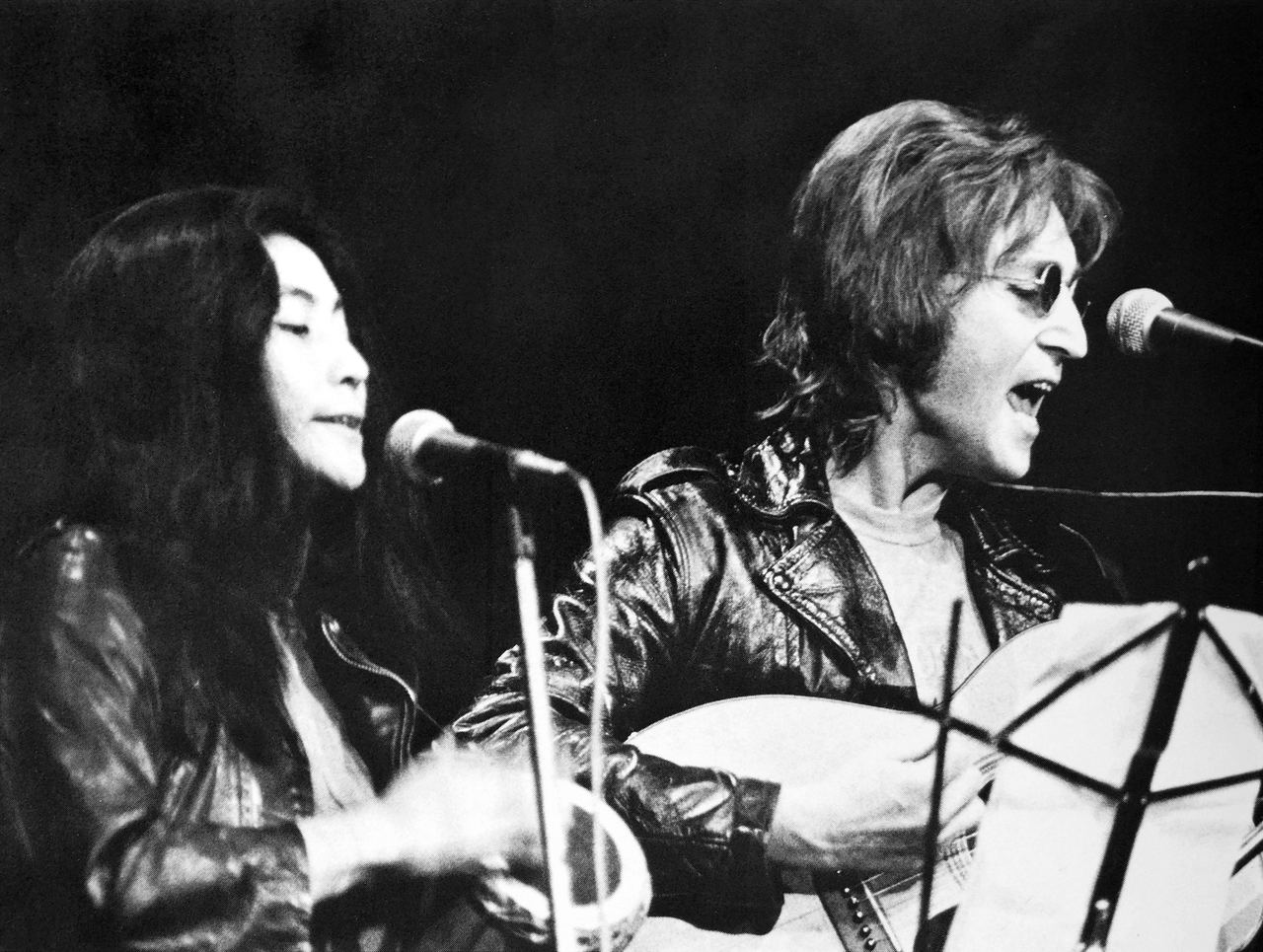
Neither response requires pretending that music can solve everything it asks us to confront.
A record cannot remove a border or settle an argument by itself. But it can make an unfamiliar possibility feel close enough to consider. Here, the melody gives that possibility somewhere to stay.
Fifty-five years after the album arrived, that is a better reason to listen than the anniversary alone.
Hear Imagine below in the official video from John Lennon’s channel, presented with the 2020 Ultimate Mix. This is a music video, not a concert recorded on September 9.
Let the piano begin. This time, hear the question as well as the comfort.
Continue reading
The Slade Anthem That Turned a Number-One Hit Into an Invitation to Let Go
Some records ask you to listen. This one sounds as though it expects you to join in.
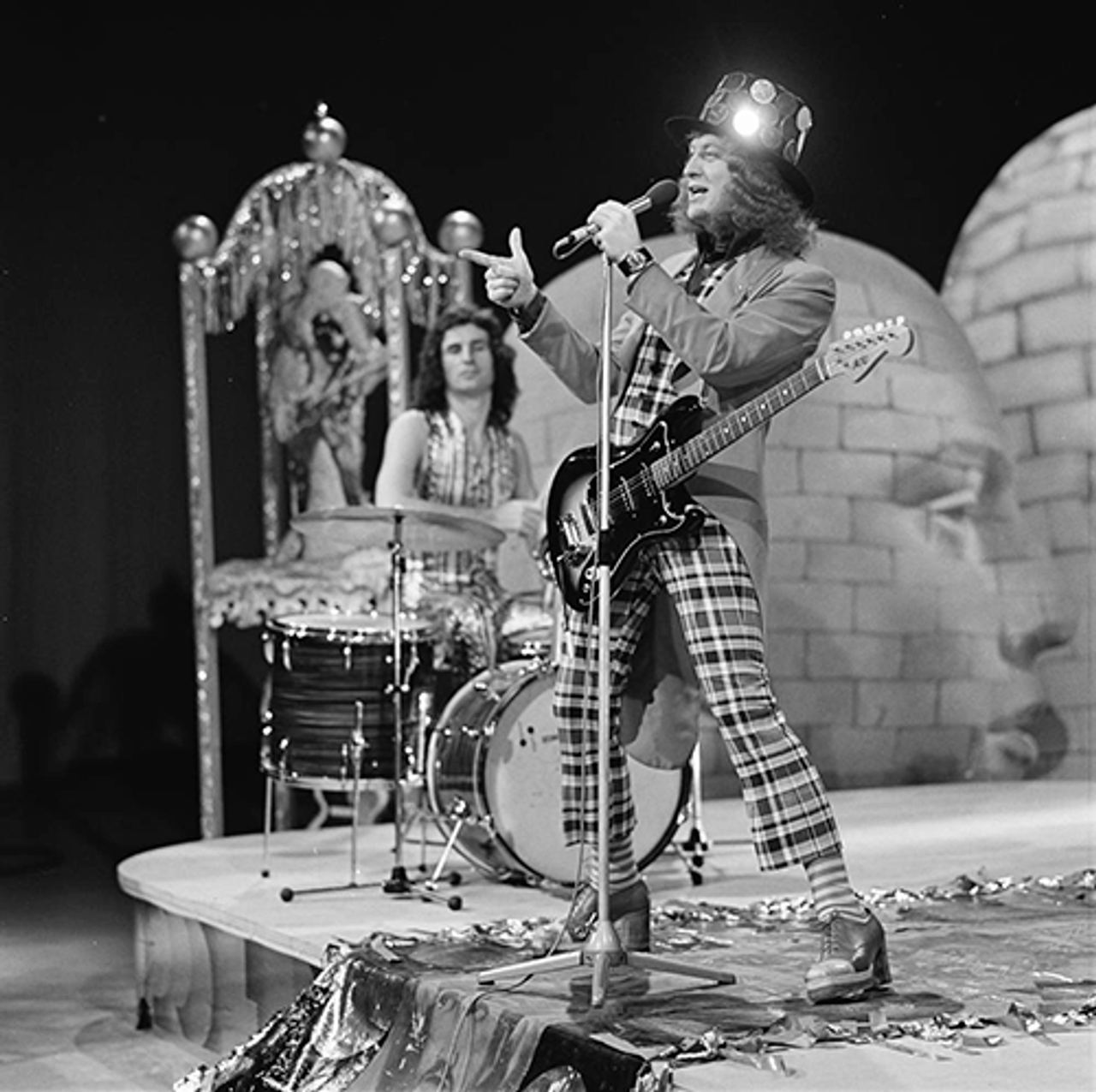
Noddy Holder’s voice does not arrive politely. It comes through with a rasp, a push, and the kind of conviction that makes a chorus feel larger than the room where you are hearing it.
Behind him is Slade: a band whose sharpest pop instinct could live inside an enormous amount of noise.
On the UK chart dated September 9, 1972, Mama Weer All Crazee Now reached number one. It stayed at the top for three weeks. September 9, 2026 marks fifty-four years since the beginning of that run.
Noddy Holder on TopPop, November 2, 1973, a later appearance. Photo: AVRO, via Beeld en Geluid / Wikimedia Commons. Unaltered. CC BY-SA 3.0 NL: . Source:
The date explains why we are returning to it. The opening seconds explain why it is worth returning to.
The title may look unruly on paper, but the musical idea is remarkably direct. A strong beat, a voice that refuses to disappear into the arrangement, and a repeated hook leave little distance between performer and listener.
You do not have to admire the spelling to understand the invitation.
Holder and Jim Lea wrote the song, and Chas Chandler produced the recording. With Dave Hill on guitar and Don Powell on drums, the band’s familiar lineup gave that invitation its weight.
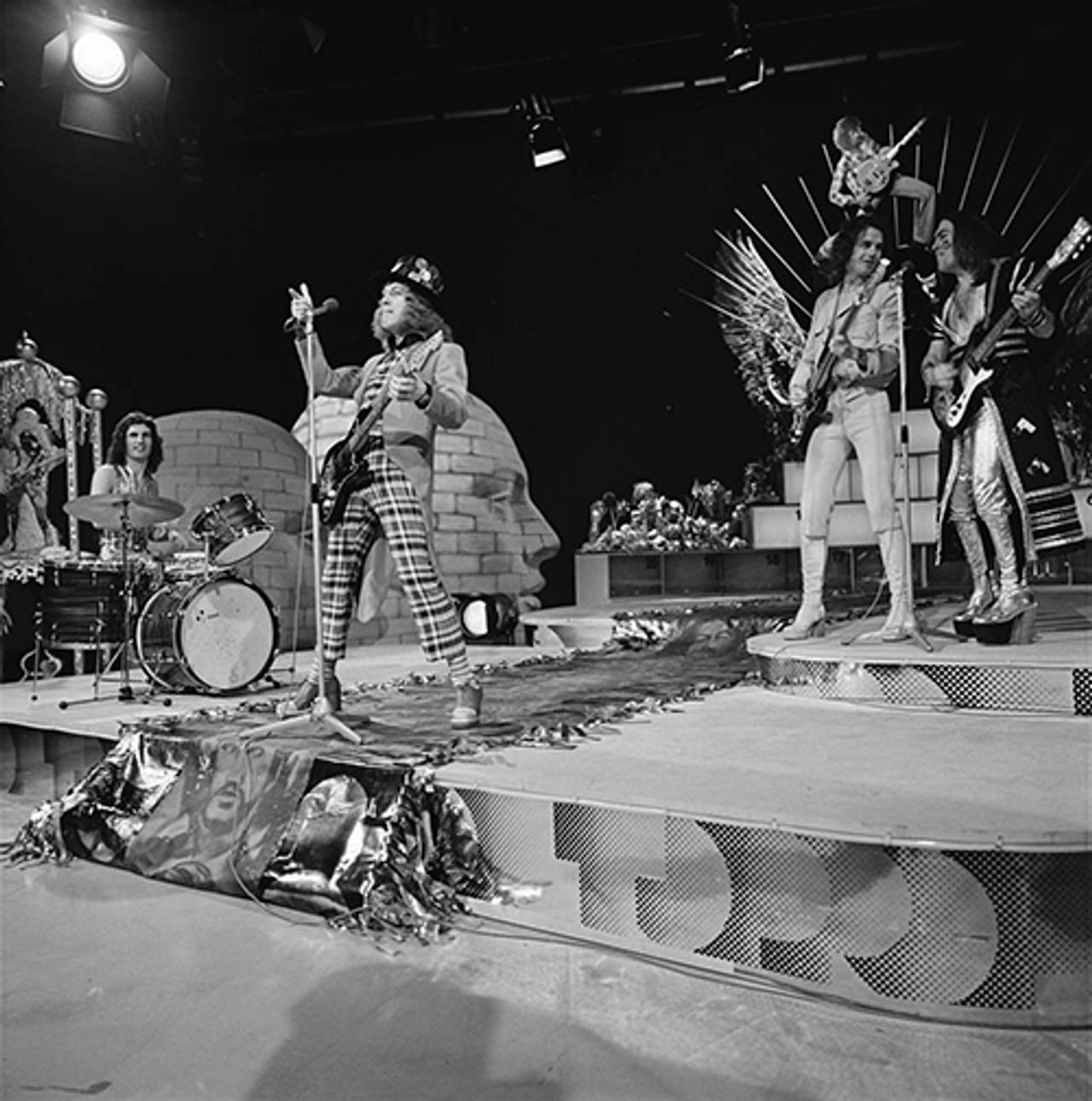
Listen to the balance. The performance can sound rough-edged without losing the shape of a pop song. Every return to the hook makes the next one easier to anticipate.
That is where the pleasure sits: not in waiting for a complicated twist, but in knowing what is coming and wanting it anyway.
A different view of Slade on TopPop, November 2, 1973; not the September 1972 chart moment. Photo: AVRO, via Beeld en Geluid / Wikimedia Commons. Unaltered. CC BY-SA 3.0 NL: . Source:
For anyone who remembers this music from a bedroom radio, a record shop or a crowded dance floor, the voice may bring the setting back before the mind supplies a date.
For a younger listener, there is no memory to recover. The record has to work on its own. Its directness gives it a chance to do exactly that.
Anniversary articles often make old music sound respectable. This song is a useful reminder that respectability was never the only point.
Sometimes a record matters because it lets a listener drop their guard for a few minutes. It replaces distance with participation. Even listening alone, you can hear where the answering voices ought to be.
Fifty-four years after that climb to number one, the chart position remains part of its history. The more immediate test is whether the next chorus still makes you want to join it.
Hear Slade’s Mama Weer All Crazee Now in the official visualizer below. It accompanies the recording; it is not footage of a live performance on September 9, 1972.
Let Holder take the first line. You may remember what to do with the next.
Before Elvis Made It Rock, Bill Monroe Made This Song Hurt
Before Elvis made it race, Bill Monroe let it ache.
One song could hold both feelings. In one recording, it swayed like a lonely dance. In another, it sounded ready to leave the room and take the listener with it.
The melody connected them. The man who wrote it was Bill Monroe.
September 9, 2026 marks thirty years since Monroe’s death. For a musician remembered as the Father of Bluegrass, there are many ways to measure his influence. But one of the simplest is to return to a song that traveled beyond the sound in which he first sang it.
Bill Monroe performing in 1982, decades after the original recording. National Park Service collection, via Wikimedia Commons; listed as a US government public-domain photograph.
The song is Blue Moon of Kentucky.
Monroe’s early version was a waltz. Its gentle three-beat motion gave his high voice room to stretch the sadness, making the melody feel suspended between affection and absence.
That is the version worth hearing before the story moves to Memphis.
In 1954, Elvis Presley recorded the composition at Sun with guitarist Scotty Moore and bassist Bill Black. The arrangement changed its gait: the waltz became an energetic rockabilly performance in four-four time.
It appeared on the other side of Presley’s first single, alongside That’s All Right. A song rooted in Monroe’s country world had become part of a different musical beginning.
But the later recording does not make the earlier one merely a stepping stone.
Listen to Monroe’s voice on its own terms. The high notes do not smooth away the loneliness. They expose it. The unhurried movement allows a familiar feeling to stay in the room instead of rushing toward a release.
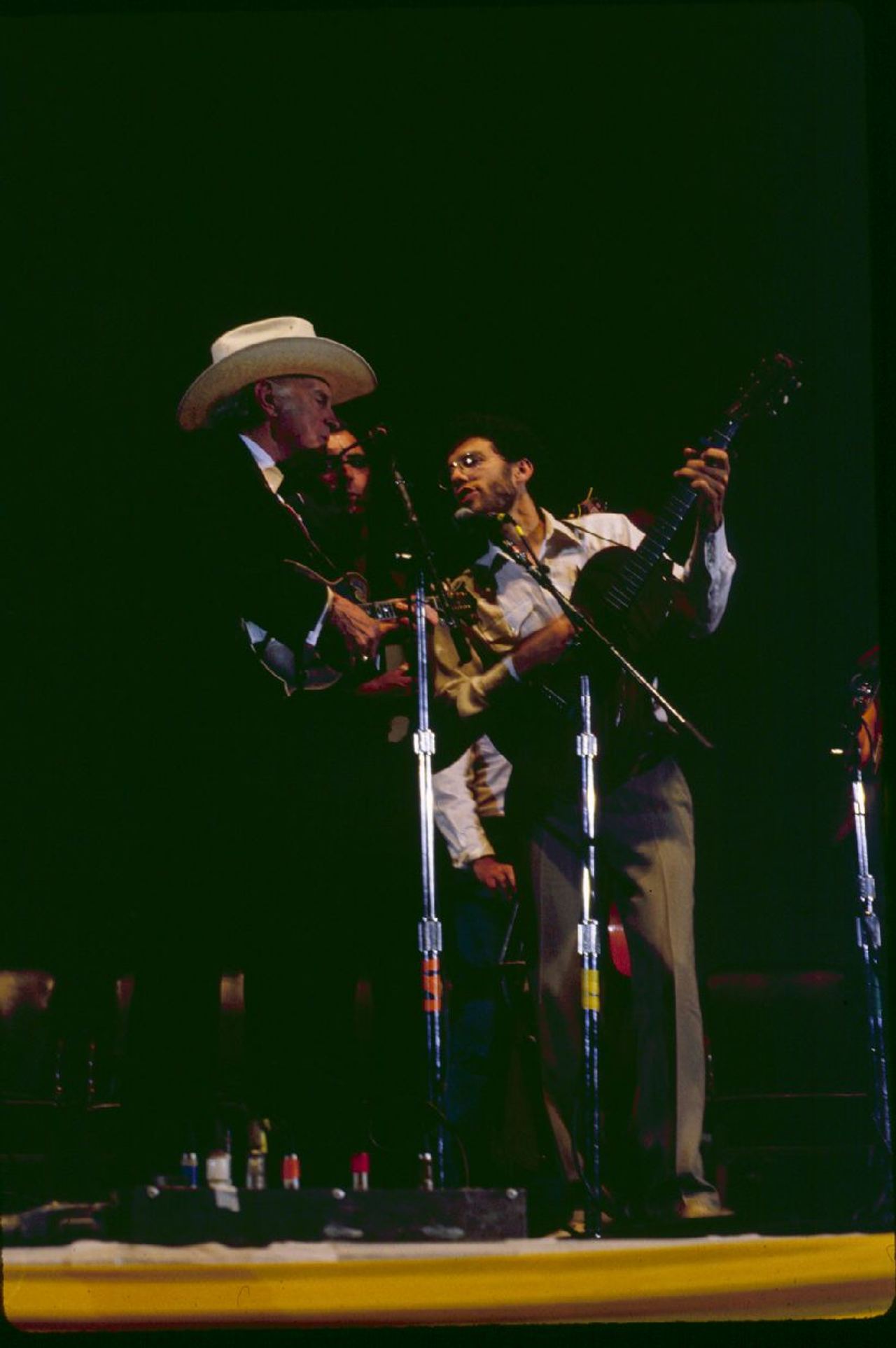
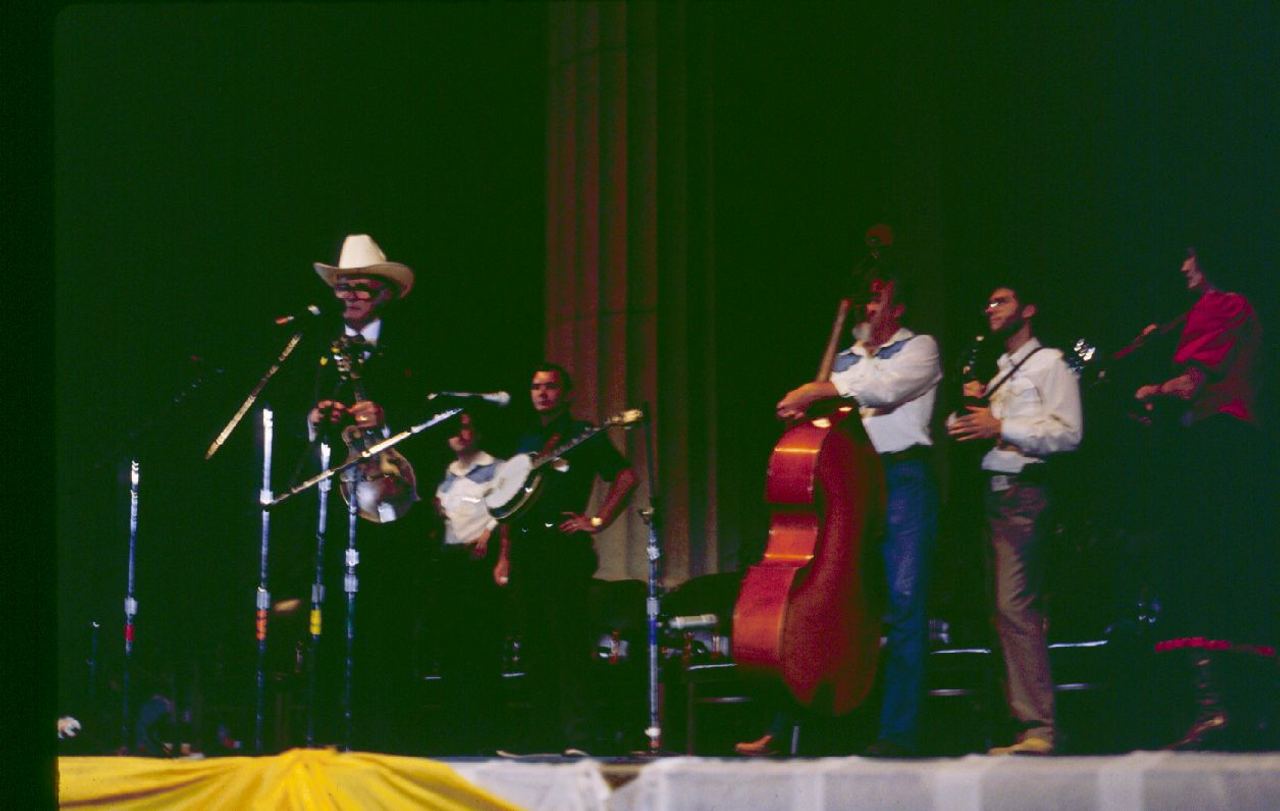
A wider view of Monroe and the Blue Grass Boys at the same 1982 event. National Park Service collection, via Wikimedia Commons; public domain in the United States. Neither photograph depicts the original studio session.
The phrase Father of Bluegrass can sound like a title in a history book. On a recording, it becomes something less distant: a particular voice, an instrumental conversation, and a way of making sorrow clear without making it small.
Monroe’s mandolin playing and the musicians who passed through his Blue Grass Boys helped shape a sound that continued far beyond any one lineup. His songs became music other people could carry, change and bring home again.
That is what makes this anniversary more than a date of loss.
Thirty years after his death, we can still choose to hear the singer before the legend. We can hear how differently a tune moves when its sadness is allowed to take its time.
Listen to Bill Monroe and his Blue Grass Boys performing Blue Moon of Kentucky in the official Columbia/Legacy audio below. This is an archival recording, not audio from the pictured 1982 performance.
Before you remember what Elvis did with it, hear what Monroe put there.
Read more stories
- My Husband Suddenly Banned Our 12-Year-Old from the Garage – Then She Handed Me Something She’d Found Under His Workbench
- Pistachio Pineapple Cake
- I Pretended to Be the Daughter of an Elderly Man I Met by Chance – Days Later, His Lawyer Found Me and Said, ‘You Walked Straight Into His Trap’
- Caramel Corn Snack Mix