1963: The Year Mahalia Jackson Brought the Power of Gospel Into One of America's Defining Civil Rights Moments
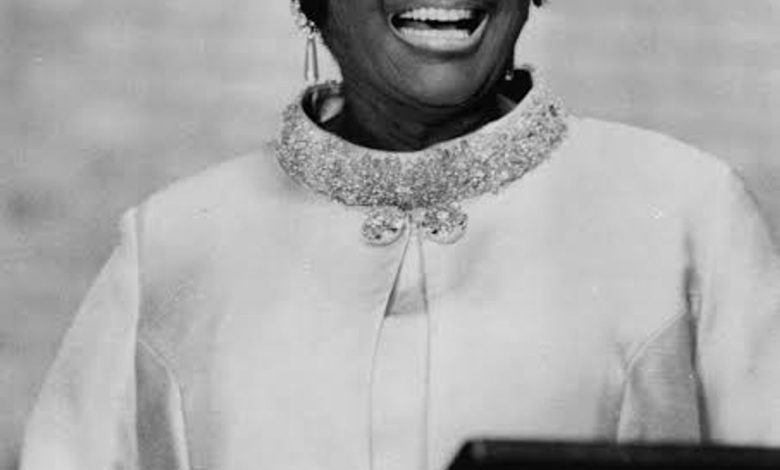
At the March on Washington, Mahalia Jackson did more than perform before a quarter-million people. She brought the sound, emotion, and call-and-response spirit of the Black church to the Lincoln Memorial – then, from just behind Martin Luther King Jr., helped nudge one of the most famous speeches in American history toward its unforgettable final movement.
Before the Dream, There Was a Voice
When people remember August 28, 1963, one voice usually comes first.
Martin Luther King Jr. stands before the Lincoln Memorial and tells America about a dream.
But before King reached the improvised passage that would define the day, another voice had already changed the emotional temperature of the crowd.
Mahalia Jackson sang.
She was not there as background entertainment between political speeches. She was one of the most famous gospel singers in America, a woman whose voice could fill churches, concert halls, radio sets, and living rooms without losing the feeling of testimony.
At the March on Washington for Jobs and Freedom, that voice became part of a national argument about citizenship.
Jackson sang “I’ve Been ‘Buked and I’ve Been Scorned.”
The crowd swayed and clapped.
When they wanted more, she answered with “How I Got Over.”
Then King stepped forward.
The sequence mattered.
For a few minutes, the Lincoln Memorial had sounded less like a political stage and more like a church.
Mahalia Jackson Had Spent a Lifetime Refusing to Separate Music From Faith
Jackson’s power in 1963 came from a career built on unusual discipline.
Born in New Orleans in 1911, she grew up inside the sound of the Black church while also hearing blues, jazz, street cries, and the musical life of the city around her.
After moving to Chicago, she became closely associated with gospel composer Thomas A. Dorsey and helped carry the developing gospel style beyond storefront churches and revival meetings.
She had chances to move into secular music.
She refused.
That choice was not a rejection of ambition. Jackson became enormously successful while remaining committed to gospel. Her 1947 recording “Move On Up a Little Higher” became a landmark gospel hit. She appeared on national television, toured internationally, sang in major concert halls, and became known as the Queen of Gospel.
By the early 1960s, she did not need the March on Washington to make her famous.
What the March revealed was how naturally her musical authority could become moral authority.
Gospel Was Already Inside the Civil Rights Movement
The civil rights movement did not add music as decoration.
Music was part of how the movement survived.
At mass meetings, in churches, on buses, during marches, and even inside jail cells, singing gave people courage and a sense of unity.
The Martin Luther King Jr. Research and Education Institute describes freedom songs as central to the movement’s ability to mobilize people and sustain morale. Professional performers such as Jackson and Harry Belafonte supported the struggle, but much of the music came from ordinary people singing together.
That matters when listening to Mahalia Jackson at the March on Washington.
She was a star, but she was singing inside a tradition larger than celebrity.
The Black church had long used song to turn individual pain into collective endurance.
A spiritual could begin with suffering and end with confidence.
A gospel performance could move from lament to release.
Those patterns were already deeply familiar to the people who had spent years attending movement meetings across the South.
Jackson brought that emotional language to Washington.
She Had Been Standing With King Long Before 1963
Mahalia Jackson’s connection to civil rights was not created for one historic photograph.
The Library of Congress notes that she had become involved in the movement through Martin Luther King Jr. years earlier. In 1957, she sang at the Prayer Pilgrimage for Freedom at the Lincoln Memorial, one of the major early national demonstrations of the movement.
She also supported the Southern Christian Leadership Conference.
By 1963, the King Institute records that Jackson had helped organize a major Chicago fundraising rally connected to the movement and had become a longtime SCLC supporter.
King and Jackson were friends.
That personal connection helps explain why her role on August 28 felt different from the appearance of a celebrity invited simply to add prestige.
She knew the movement.
She knew King as a preacher.
She understood what happened when a congregation and a speaker began responding to each other.
That understanding would matter later in the day.
August 28, 1963: More Than 200,000 People Came to Washington
The March on Washington for Jobs and Freedom was one of the largest demonstrations the United States had seen.
Participants traveled by bus, train, car, and plane. Black and white Americans gathered together to demand jobs, voting rights, access to public facilities, better housing, education, and meaningful federal action against racial discrimination.
Estimates commonly place the crowd at roughly a quarter-million people.
The program combined speeches with music.
Joan Baez performed.
Bob Dylan performed.
Peter, Paul and Mary appeared.
Odetta, Marian Anderson, the Eva Jessye Choir, and other musicians brought different traditions into the day.
But contemporary reports singled out Mahalia Jackson.
According to research assembled by the King Institute, a United Press International report said Jackson and Marian Anderson held the enormous crowd spellbound.
For Jackson, that did not require theatrical spectacle.
It required a song.
“I’ve Been ‘Buked and I’ve Been Scorned” Was the Right Song for the Moment
King had asked Jackson to sing “I’ve Been ‘Buked and I’ve Been Scorned.”
The spiritual carried a history of hurt in its very title.
To be rebuked.
To be scorned.
To be talked about.
To remain standing anyway.
That language could not have sounded abstract to a crowd gathered in 1963.
The country was still segregated in law and practice across much of the South. That spring, images from Birmingham had shown police dogs and high-pressure fire hoses turned on demonstrators. Medgar Evers had been murdered in Mississippi in June. The proposed civil rights bill faced an uncertain future in Congress.
Jackson did not need to explain the connection.
The song already contained a vocabulary of suffering and endurance that Black audiences knew intimately.
When she sang it from the steps of the Lincoln Memorial, the old spiritual entered a new national setting.
The pain was ancient.
The demand was immediate.
She Did Not Sing at the Crowd – She Activated It
The most important detail in accounts of Jackson’s performance is the audience response.
The King Institute describes the crowd swaying and clapping along.
That is a small detail with a large meaning.
In gospel, the line between performer and listener can become unstable.
A singer offers a phrase.
The congregation answers.
A hand rises.
Someone shouts agreement.
Rhythm becomes participation.
Jackson carried that relationship into a mass political demonstration.
The people in front of her were not simply spectators.
Many had organized, marched, been arrested, faced intimidation, or traveled through the night to reach Washington.
When they responded to her singing, the sound did not belong only to Mahalia Jackson anymore.
For a moment, the crowd behaved like a congregation.
The march became something heard in the body as well as understood in the mind.
The Crowd Asked for More
After “I’ve Been ‘Buked and I’ve Been Scorned,” the audience wanted an encore.
Jackson gave them “How I Got Over.”
The title alone made it almost impossibly appropriate.
Written by gospel great Clara Ward, the song asks a question that looks backward from survival: how did I make it through?
In the church, that question could be spiritual testimony.
At the March on Washington, it carried social meaning too.
How had people survived slavery, Jim Crow, violence, discrimination, and generations of exclusion?
How had families kept moving?
How had churches kept organizing?
How had a movement reached the point where hundreds of thousands could gather peacefully at the seat of federal power?
Jackson did not turn the song into a policy speech.
She did not need to.
Gospel had always been capable of holding history inside a personal declaration.
King Said She Had Already Put Him in the Right Place
The effect on Martin Luther King Jr. was not merely something later writers invented.
After the march, King wrote Jackson a thank-you letter.
The King Institute preserves his recollection that her singing had made him happy before he even rose to speak.
That response is revealing.
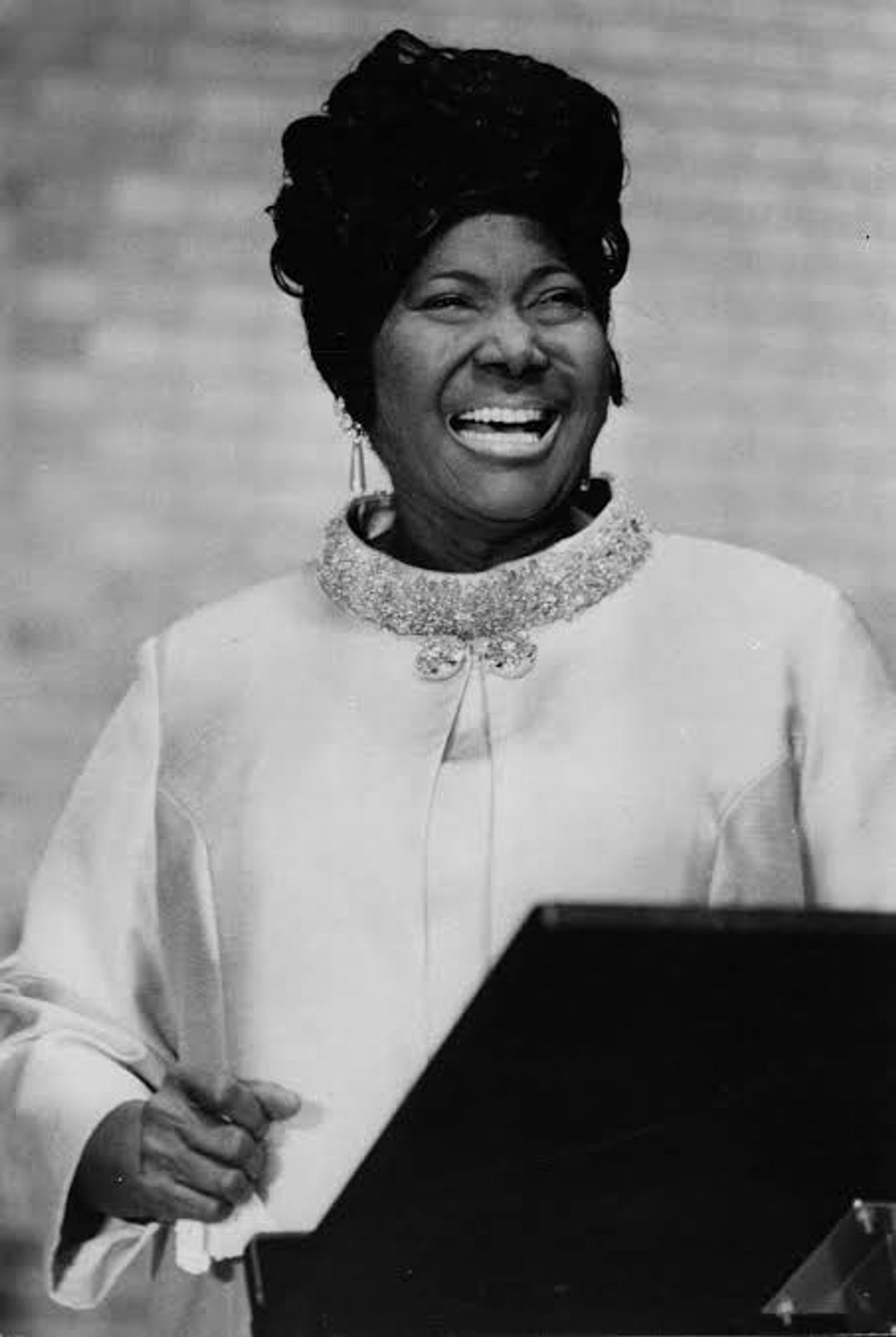
King was a political leader, but he was also a Baptist preacher.
He understood how music prepares a congregation.
A hymn can gather attention.
A spiritual can move an audience from fatigue to expectation.
A singer can create the emotional space in which a preacher’s words land differently.
By late afternoon, the crowd had listened to hours of speeches and performances.
Jackson helped restore energy.
Then King stood at the microphone.
The gospel singer had finished her songs.
Her influence on the moment was not finished.
Then Came the Line From Behind Him
King began his speech with prepared remarks.
He spoke of the Emancipation Proclamation, the Constitution, injustice, urgency, and the need to continue the struggle without hatred.
Then, as he moved toward the later portion of the address, Mahalia Jackson called out from behind him.
The Library of Congress account of the speech records her words: “Tell them about the dream, Martin!”
King knew exactly what she meant.
He had used dream imagery before in sermons and speeches.
Jackson had heard him.
According to the Library of Congress essay, King then moved into the improvisational passage that became the most famous part of the address.
It would be wrong to say Jackson created the “I Have a Dream” speech.
King had developed those ideas over time, and his oratorical skill made the moment possible.
But it is equally wrong to erase her intervention.
She recognized the preacher she knew.
And she called that preacher forward.
A Gospel Singer Recognized When the Speech Needed to Become a Sermon
This is why Jackson’s role makes sense only when we remember where she came from.
She understood the difference between a written address and a living sermon.
A sermon responds to the room.
The preacher listens while speaking.
The congregation helps determine the rhythm.
Jackson had spent decades inside that exchange.
She knew King’s cadence.
She knew the dream material.
She knew what his voice sounded like when he stopped reading and began preaching from memory and conviction.
Her call from behind the podium was almost a form of call-and-response.
She gave him a prompt.
He answered.
The speech shifted.
The repeated phrase “I have a dream” became its organizing rhythm.
The crowd began to respond more intensely.
Political language became prophetic language.
The March on Washington was still a demonstration for jobs and freedom.
But now it also sounded like a revival meeting taking place in front of the nation’s most famous memorial to emancipation.
Music and Oratory Were Speaking the Same Language
The connection between Jackson’s singing and King’s speech was deeper than chronology.
Both drew power from Black religious traditions.
Both understood repetition.
Both understood the emotional force of a phrase returning again and again.
Both moved between suffering and hope.
Jackson could take a line about being scorned and turn it into endurance.
King could describe segregation and then move toward a vision of freedom.
Neither required the audience to choose between pain and faith.
The two belonged together.
That is why the March on Washington cannot be understood only as a collection of famous speeches.
Music helped shape how the day felt.
The songs did not replace the demands for legislation, employment, voting rights, and equal citizenship.
They gave those demands emotional memory.
For America Watching on Television, Gospel Was Suddenly at the Center of History
Millions of Americans encountered the March through television, radio, newspapers, and later film.
For some viewers, Mahalia Jackson was already a familiar national star.
For others, the performance may have been an introduction to the sound of Black gospel in its most commanding form.
That visibility mattered.
Jackson had spent her career refusing to treat gospel as music that needed to apologize for its origins in the Black church.
She could sing in Carnegie Hall and still sound rooted in worship.
She could appear on television and still shout, stretch a phrase, bend time, and let emotion break the neat boundaries of concert singing.
At the Lincoln Memorial, those qualities did not make the event seem less serious.
They made the moral stakes feel larger.
Gospel was not outside the political story.
It was helping tell it.
The Moment Did Not End in Washington
The year 1963 did not resolve the struggle.
The Civil Rights Act would pass in 1964.
The Voting Rights Act would follow in 1965.
Between those landmarks came more violence, organizing, arrests, marches, and deaths.
Jackson continued to support King.
When he was assassinated in 1968, she sang “Take My Hand, Precious Lord” at his funeral, a song closely associated with him.
That later performance has its own enormous emotional weight.
But the March on Washington captures a different relationship.
In 1963, both Jackson and King were alive, working, and pushing toward a future they believed could still be changed.
She sang before he spoke.
Then she helped call him into the language the world would remember.
Five years later, she would sing in grief.
On August 28, she sang in expectation.
1963 Was the Year Gospel Stood Beside the American Dream
Mahalia Jackson’s importance at the March on Washington cannot be reduced to one shouted sentence.
“Tell them about the dream, Martin” is unforgettable because of what followed.
But before that intervention, Jackson had already done something equally important.
She had brought the emotional vocabulary of gospel into one of the defining public gatherings in American history.
“I’ve Been ‘Buked and I’ve Been Scorned” named the hurt.
“How I Got Over” testified to survival.
Then King’s dream pointed toward a future.
Taken together, the sequence almost forms its own structure:
suffering,
endurance,
vision.
Jackson did not write King’s speech.
She did not organize the March.
She did not create the civil rights movement.
Her role was more specific and more powerful than mythology needs it to be.
She brought a voice shaped by the Black church to the Lincoln Memorial.
She reminded a quarter-million people what collective feeling sounded like.
And when her friend stood at the microphone, she recognized the moment when a prepared speech could become something larger.
In 1963, Mahalia Jackson did not merely sing at history.
For a few crucial minutes, gospel helped history find its voice.
Listen Again
If this story brought back the sound of the Lincoln Memorial crowd, the force of a church voice carried into the open air, or the moment music and oratory seemed to become one, revisit these two recordings connected to Mahalia Jackson’s gospel language at the March.
Mahalia Jackson – I’ve Been ‘Buked and I’ve Been Scorned (March on Washington, 1963)
Mahalia Jackson – How I Got Over (Live, Columbia/Legacy)
Read more stories
- When Four Boys Took the Church Stage, the Whole Room Lost It
- High Roller Pinwheel Sandwiches
- My Neighbor Parked His Car on My Lawn – The Surprise Waiting for Him the Next Morning Was Priceless
- A Woman Demanded We Move My Son’s Wheelchair Out of the Dining Room Because It Was ‘Ruining Everyone’s Meal’ – She Never Expected What This Mom Would Do Next