A mother’s grief ignites a journey of social justice through writing
In the heart of Manchester, in the year 1845, Elizabeth Gaskell faced a profound sorrow that would shape her life and legacy. She cradled her nine-month-old son, feeling the warmth of his little body for the last time. A scarlet fever outbreak had forced her and her husband to escape to Wales, yet the relentless illness followed them, stealing her child away from them far from their home. The loss was devastating, a wound that left her speechless for months, shrouding her in an unbearable silence. Friends and family worried that she might never find her voice again, as grief wrapped her in a melancholy cocoon.
It was in this state of loss that a gentle nudge from her husband and the supportive whispers of those around her led Elizabeth to a surprising suggestion: write. They believed that perhaps the act of writing could help her navigate through her despair. Reluctantly, she took up the pen, unaware that this simple act would become a powerful catalyst for change. As she searched for her words, she found her own world teeming with stories, ones she had witnessed firsthand in the impoverished neighborhoods surrounding her.
As the wife of a minister, Elizabeth had spent years tending to the welfare of the working class. She had seen the dark side of industrial Manchester—the children laboring in dangerous mills, families crammed into squalid cellars, and workers succumbing to disease and despair. These weren’t just statistics; they were faces she recognized, lives she had touched through her charity work. Her heart ached not only for her loss but for the countless souls trapped in a system that seemed designed to perpetuate their suffering.
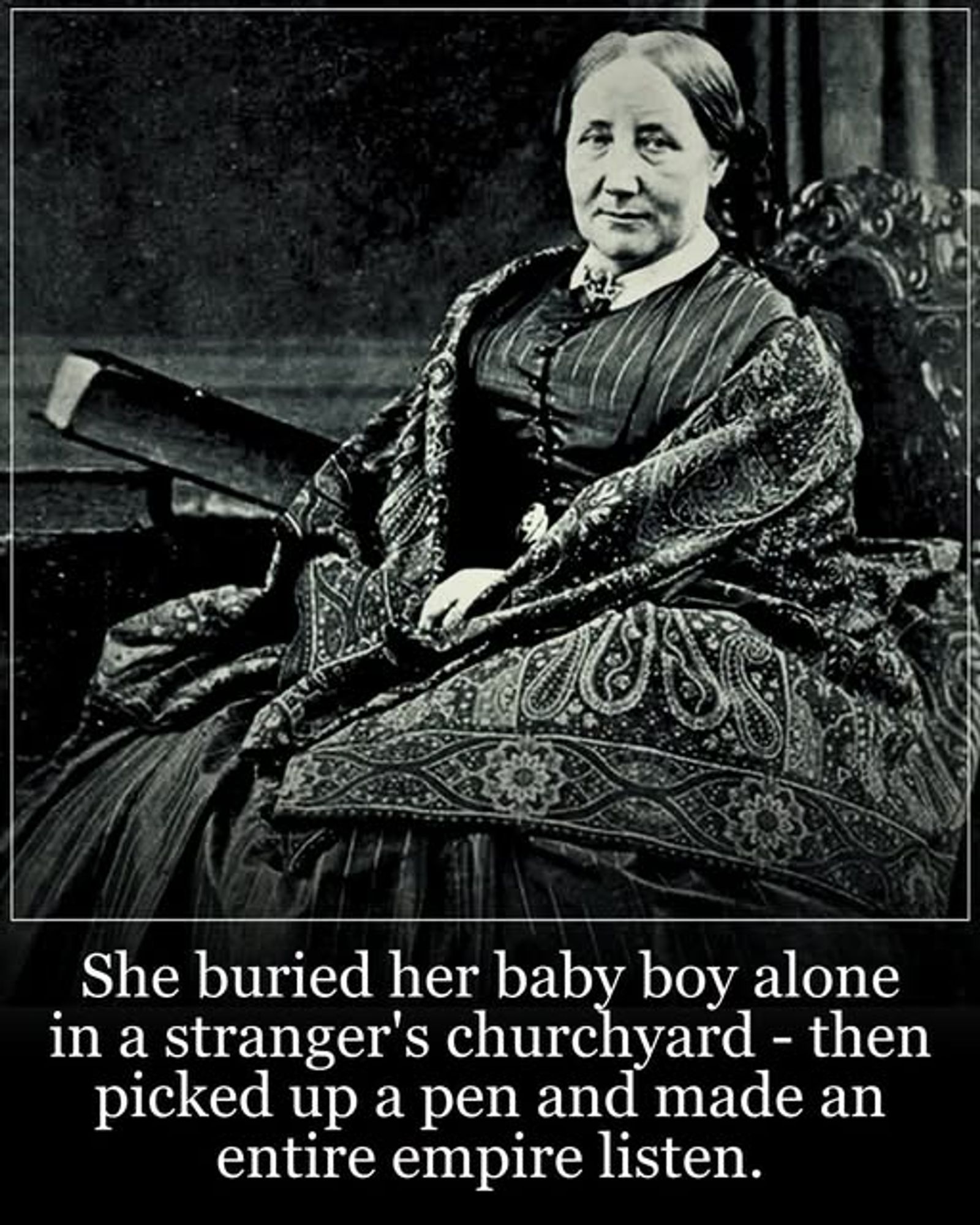
With each word she wrote, Elizabeth transformed her anguish into empathy, crafting a narrative titled “Mary Barton” that would resonate deeply with readers. Published anonymously in 1848, the novel depicted the relentless grind of poverty and injustice faced by its characters. Elizabeth didn’t shy away from portraying the moral complexities of a father pushed to the brink by desperation. It was not simply a tale of tragedy; it was a call for understanding that poverty was not a personal failing but a systemic issue. As she laid bare the harsh realities of working-class life, her words stirred up controversy, angering factory owners who felt threatened by her truth.
Critics dismissed her as an outsider, a minister’s wife who had no business delving into such gritty matters. Yet, Elizabeth continued her literary journey unbowed, her resolve only strengthened by the backlash. Readers from all walks of life were moved by her honest portrayal of their struggles, and the book quickly sold out, striking a chord with the working class who finally saw their lives reflected in literature.
Her next work, “North and South,” introduced a spirited heroine, Margaret Hale, who embodied Elizabeth’s own strength and conviction. Through Margaret’s story, Elizabeth continued to challenge societal norms, advocating for justice and equality, unafraid to confront the men who held power.
In 1857, Elizabeth took on a more personal project, penning a biography of her dear friend Charlotte Brontë. She honored Charlotte’s legacy while daring to share the unvarnished truths of their shared struggles as women in a male-dominated literary world. Elizabeth Gaskell’s journey from a grieving mother to a poignant voice for social change is a testament to the transformative power of writing—a reminder that even in our darkest moments, the act of expressing our truths can illuminate the path for others.