The Kinks’ ‘Sunny Afternoon’ Turns a Lazy Summer Tune Into a Sharp Portrait of 1966 Britain


A hit that moved against the current
When “Sunny Afternoon” appeared in the summer of 1966, British pop was expanding in every direction at once. Psychedelia was beginning to color the charts, studio experimentation was becoming a story in itself, and rock music was steadily claiming greater artistic ambition. Into that atmosphere came a song that sounded, on first encounter, almost unbothered: unhurried, tuneful, and charmingly relaxed.
paras
The voice of decline, sung with a smile
What makes “Sunny Afternoon” so enduring is the brilliance of its point of view. The narrator is not a rebel, laborer, or outsider, but a wealthy, aggrieved man complaining that the taxman has taken his money, his girlfriend has left, and his comfortable life is slipping from his grasp. In lesser hands, the character might have sounded merely comic or merely bitter. The Kinks, led by Ray Davies’ writing, made him both absurd and oddly human.
The song’s irony is the engine of its power. The melody drifts by with warmth and ease, while the lyrics expose self-pity, entitlement, and a fading social order. That tension between sound and meaning gives the record its bite. The listener can enjoy its lazy summer atmosphere and, at the same time, recognize the quiet mockery inside it.
An upper-class lament delivered with detached irony, wrapped in a deceptively breezy melody.
Class tension in three minutes
In 1966, Britain was not simply enjoying the glow of Swinging London. Beneath the fashion, design, and pop excitement were older structures of class and newer feelings of economic pressure and social change. “Sunny Afternoon” caught that friction with remarkable economy. It did not lecture. It dramatized. By letting a privileged narrator complain about his shrinking comforts, the song turned social commentary into character study.
That was part of what made it feel so fresh. British pop had often engaged with everyday life, but The Kinks had a special gift for turning observation into miniature fiction. Here, the target was not only one unhappy rich man, but a whole cultural mood: the sense that established status was no longer immune from scrutiny, ridicule, or decline. The song’s satire was gentle in tone and devastating in implication.
Why the arrangement matters as much as the lyric
The record’s impact is inseparable from its sound. “Sunny Afternoon” does not rush to announce itself as a protest song or a social critique. Instead, it settles into a languid groove that feels almost drowsy, the musical equivalent of leaning back in a deck chair while the world quietly changes around you. That ease is precisely what sharpens the wit. The arrangement makes the narrator’s complaints feel cushioned, even pampered.
The contrast is the genius. Rather than matching grievance with aggression, The Kinks paired discontent with elegance. The result is bittersweet rather than angry, amused rather than preachy. It is pop music that trusts listeners to hear the joke and the unease at the same time. In that balance, the band found a sophisticated new way of saying something serious without sacrificing immediacy.
A turning point for The Kinks
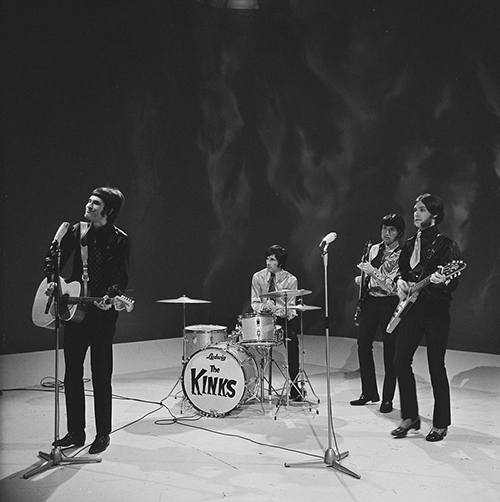
By the time “Sunny Afternoon” became a major hit, The Kinks were already established as a formidable singles band. But this record helped define them as something more than hitmakers. It reinforced their identity as chroniclers of British life, attentive to detail, contradiction, and the strange poetry of ordinary speech. Their songs could still be catchy enough for mass success, yet they also carried a novelist’s eye for social behavior.
That combination became central to the group’s legacy. The Kinks showed that rock and pop could be witty, observational, and rooted in local realities without losing commercial appeal. “Sunny Afternoon” stands at that crossroads: accessible enough to top the charts, pointed enough to widen the possibilities of what a hit single could do. It suggested that satire and melody were not opposites but ideal partners.
The song’s long afterlife
Nearly six decades later, “Sunny Afternoon” remains one of those records that feels instantly familiar and still slightly mischievous. Its surface pleasures are intact: the relaxed tempo, the singable hook, the atmosphere of idle summer haze. But the song continues to reward closer listening because its central joke has never gone stale. Comfort, resentment, privilege, and decline remain recognizably modern themes.
That is why the record still feels larger than nostalgia. It belongs to 1966 very specifically, yet it also escapes that moment by understanding something permanent about how societies talk about loss and who gets to complain. The Kinks turned a sunny pop single into a subtle social portrait, and in doing so created one of the most elegantly ironic hits of the era.
Quick Facts
- Song: “Sunny Afternoon”
- Artist: The Kinks
- Release period: June 1966
- Core theme: Class tension and upper-class decline rendered as pop satire
- Musical character: Breezy, bittersweet, and ironic
- Historical significance: Helped cement The Kinks as cultural commentators as well as hitmakers
Image credits: Europe_countries_map_en_2.png: San Jose (map), Hayden120 (retouch) derivative work: I.M.S. (talk) / Wikimedia Commons / CC BY-SA 3.0; VARA. Photographer: W. Veenman / Wikimedia Commons / CC BY-SA 3.0 nl; Gravel95 / Wikimedia Commons / CC0.