The pilot who never came home, and the name that remained
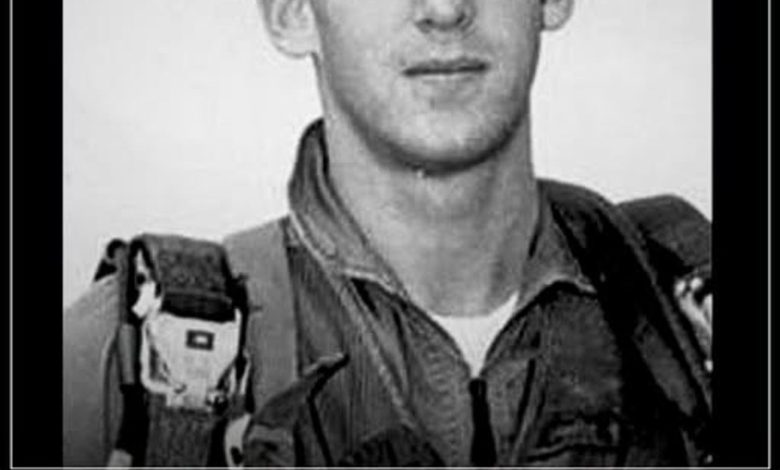
On the morning of September 3, 1967, Captain Herbert William Moore Jr. climbed into the cockpit of his F-105D Thunderchief at Korat Royal Thai Air Force Base and headed into a mission that would not bring him back. Flying as the number two aircraft in a flight of four, he was part of a strike over Quang Binh Province in North Vietnam, one of countless young pilots sent into airspace so heavily defended that every run carried the weight of chance and resolve.
His target lay ten miles northeast of Dong Bai Dinh. As the formation moved in, anti-aircraft fire filled the sky. In the chaos of the attack, Moore’s aircraft was hit. He ejected, and for a brief moment, there was hope. Rescue crews picked up beeper signals — that faint electronic pulse that meant a pilot had survived the fall and might still be waiting somewhere below, alive and reachable.
Search and rescue teams worked through the night, chasing that fragile signal and the possibility it represented. But by the next morning, the signals had gone silent. No voice answered the calls sent out for him. No wreckage brought certainty. No witness could close the story. Herbert Moore was carried as Missing in Action, a designation that held both hope and heartbreak: not confirmed, not resolved, just missing.
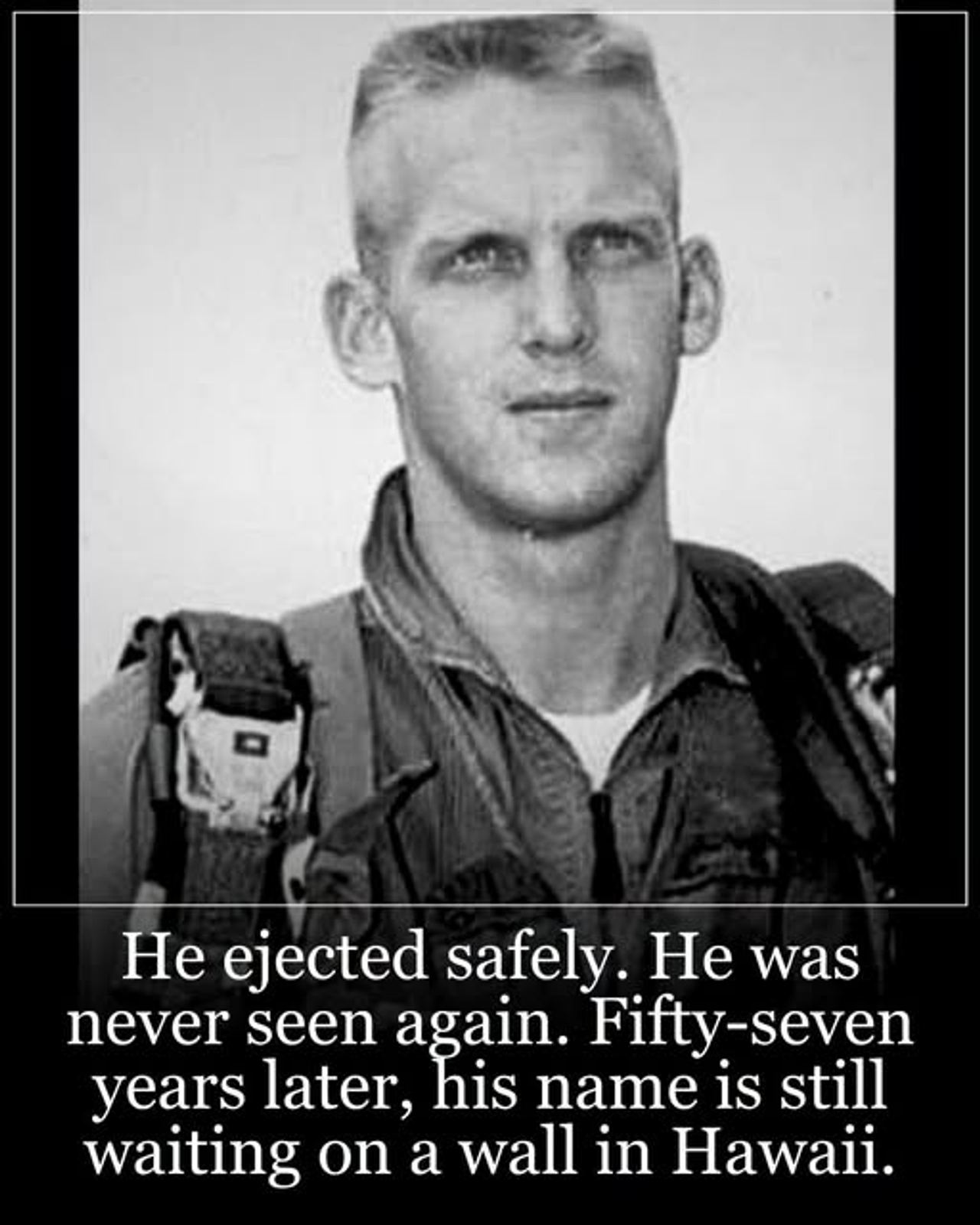
For his family, that uncertainty stretched far beyond the day he disappeared. They waited through the rest of the war and through the return of prisoners in 1973. They waited through the years that followed, when time moved on for everyone else but not for them. There was no body to bury, no last letter to place in a drawer, no final moment to mark with the clean ache of goodbye. Only absence, repeated over and over, and a name spoken in the hope that someone, somewhere, might still answer.
In time, he was promoted in absentia to Major, a quiet recognition that he remained counted among his country’s own even without a homecoming. Today, his name is carved into the Courts of the Missing at the Honolulu Memorial in Hawaii, among the many who vanished into war and were never returned. There, the stone holds what history could not: the reminder that an unfinished life is still a life, still worthy of being remembered.
A poem often paired with stories like his offers a kind of counsel to those left behind: not to remain forever in mourning, but to keep living, to turn toward life again, and to carry forward the unfinished tasks of the one who is gone. For Herbert Moore, there was no chance to grow old, no return to the life waiting beyond the cockpit. But there is still this: a name, a memorial, and the people who continue to speak it. In remembrance, the missing are not erased. They remain, held gently in memory, where love refuses to let the story end.