The Unseen Heroes of the Kokoda Track: A Christmas Tale of Resilience
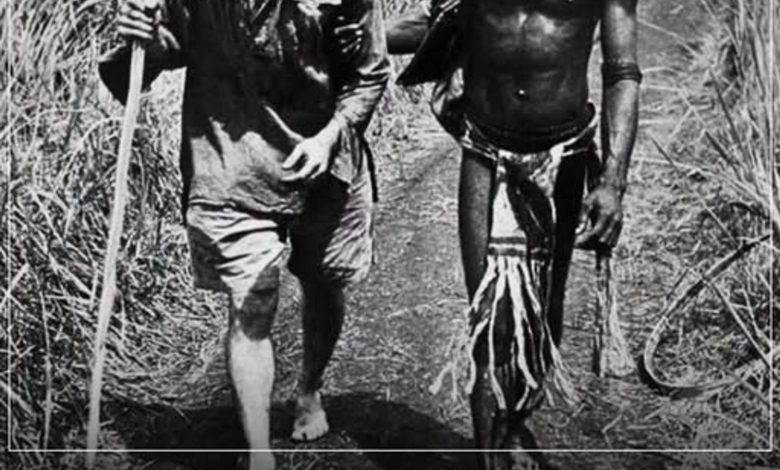
On Christmas Day, 1942, a young Australian soldier named George “Dick” Whittington found himself struggling along a treacherous jungle path in Papua New Guinea. Blindfolded and weakened, his eyes bound in bandages, Dick leaned heavily on a gnarled wooden stick for support. His uniform was tattered, a testament to the brutal reality of war, and the jungle around him pulsed with an unsettling stillness, broken only by the distant sounds of conflict. Walking beside him was a local villager, Raphael Oimbari, whose gentle guidance provided a flicker of hope amid the darkness surrounding them.
The landscape was unforgiving, a labyrinth of dense foliage and mud, steep ridges that seemed to reach for the heavens, and a ceaseless rain that soaked everything it touched. This was the Kokoda Track, a narrow footpath that had become the heart of an intense battle between Australian and Japanese forces. Months prior, thousands of Japanese troops had stormed the northern coast, intent on advancing toward Port Moresby, but the Australians stood resolutely in their way. Among them were young men like Dick, barely out of their teenage years, sent to defend their homeland at a staggering cost: lives lost to combat, countless others succumbing to disease in the unforgiving terrain.
In this chaotic struggle, many soldiers were left stranded, cut off from their units, and unable to walk. As they lay helpless in the jungle, it was the local villagers who made a courageous decision: instead of fleeing the violence, they approached it. Each man, woman, and child had already borne the heavy toll of war—their crops trampled, homes demolished, and families scattered. Yet, something remarkable blossomed from this despair. The villagers, compelled by a sense of duty and compassion, began to treat the wounded soldiers as their own.
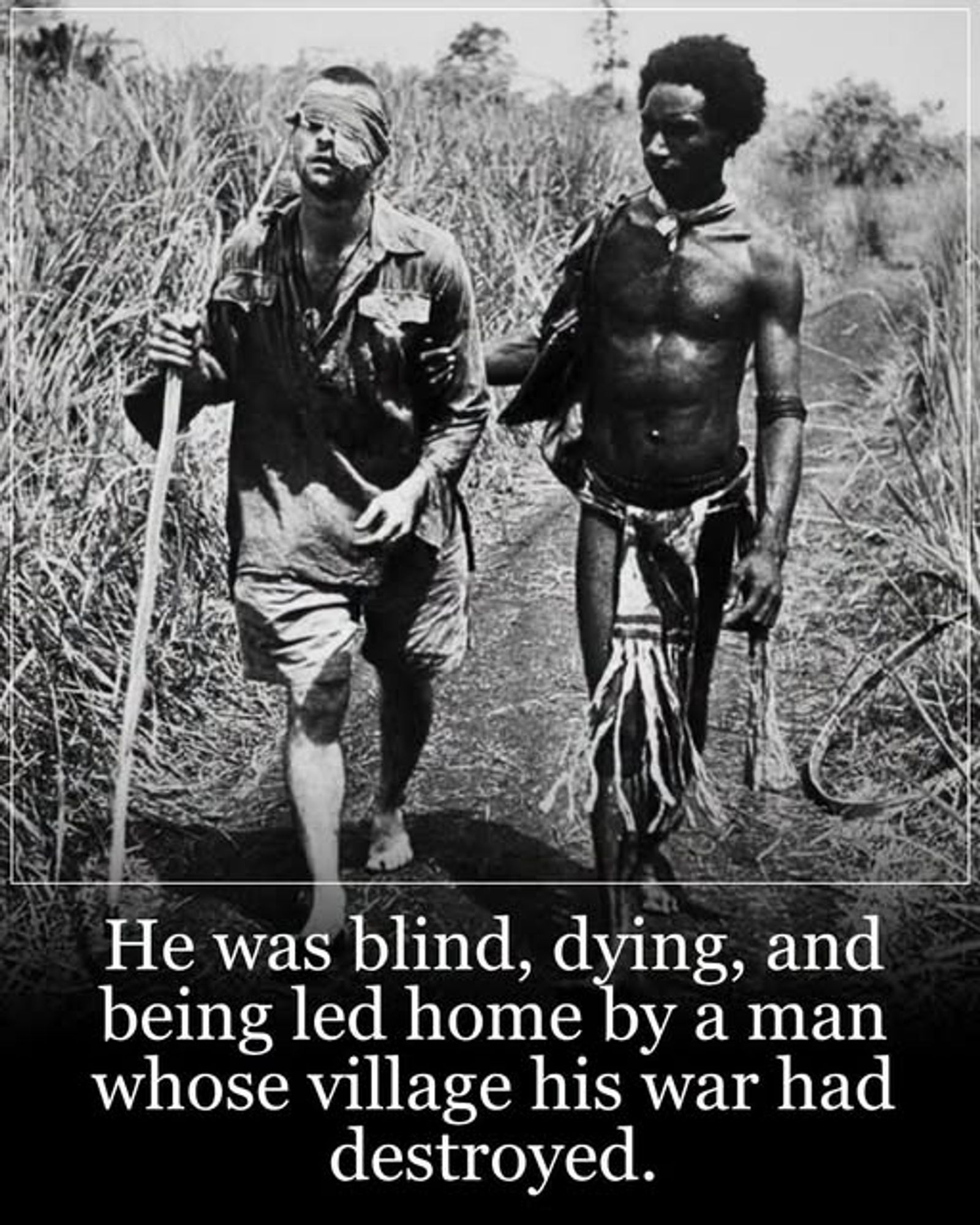
They showed up with makeshift stretchers, carrying the injured through the dense underbrush, navigating the treacherous slopes as if they were born for the task. The stretchers were manned by four villagers on each side, switching off tirelessly through the night, ensuring that a wounded soldier was never left alone. Despite the fear that gripped their hearts, they pressed on, barefoot on the rough terrain that defeated even the toughest of boots. Under enemy fire, they risked their lives to save those who wore the uniform of a foreign land.
The Australians, in their gratitude, began calling them the Fuzzy Wuzzy Angels—a name that would become synonymous with bravery and selflessness for generations to come. These villagers embodied humanity in the face of chaos, offering shelter, food, and unwavering support to those who had been cast aside by the war. It is estimated that thousands of local Papuans, like Raphael, joined this noble effort, transforming the battlefront into a tapestry of extraordinary connections and shared humanity.
As Dick continued down the path, supported by Raphael’s unwavering commitment, a profound realization washed over him: sometimes the truest strength lies not in the weapons we wield, but in the kindness we extend to one another. In the heart of war, amidst the darkness, these Fuzzy Wuzzy Angels became a beacon of hope, reminding all who passed through that compassion knows no borders, and even in the direst of circumstances, the human spirit can rise to embrace the light.