How a stranded submarine sailed home on blankets and bed frames
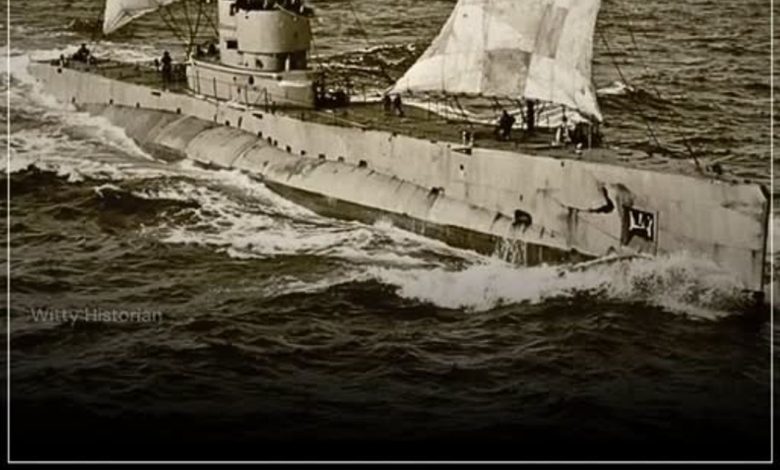
In the spring of 1921, a United States Navy submarine found itself in a predicament so improbable it almost sounds made up. The boat had been sent into the vast stretch of ocean southeast of Hawaii to search for a missing Navy tug, but after days of scanning the horizon, the crew had found nothing but open water and endless blue. Then the submarine’s own luck failed. Seawater slipped into the fuel tanks, ruining the diesel that was supposed to carry them home, and the engines fell silent.
There was worse news waiting behind that silence. The radio, their only reliable link to help, had already stopped working. Suddenly, thirty men were adrift more than a hundred miles from the nearest port, on a steel vessel built for war rather than survival, with only a few days of food between them and real danger. They were no longer searchers. In an instant, they had become the ones in need of rescue.
But the sea leaves little room for despair. Instead of surrendering to the drift, the crew looked hard at the cramped world around them and began to imagine a solution that belonged more to another century than to a modern submarine. An officer, taking stock of what they had, asked the question that changed everything: what if they sailed home?
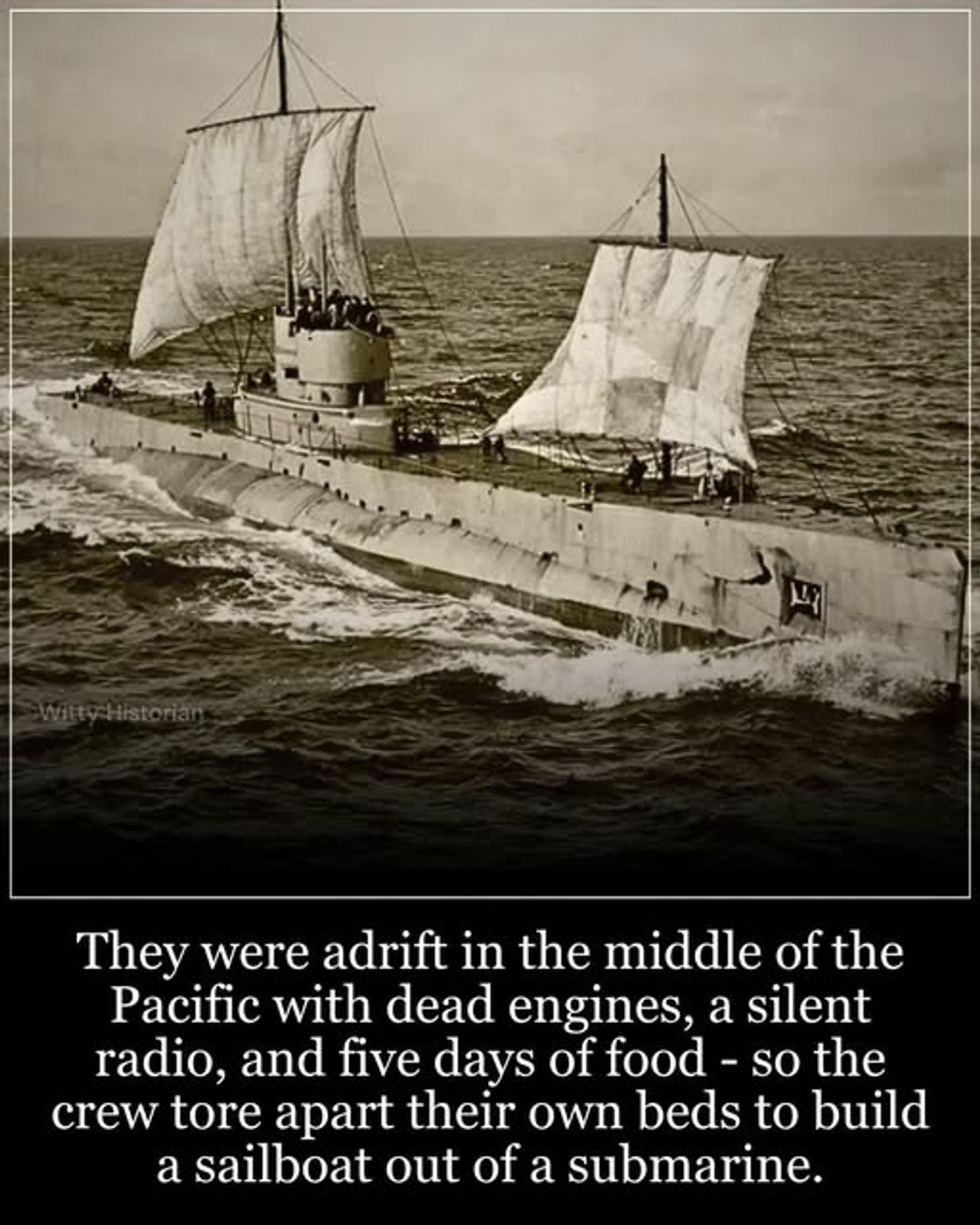
The answer was as resourceful as it was unlikely. The men tore apart their own bunks, turning steel bed frames into rough masts and booms. They lashed them to the submarine’s torpedo-loading crane and radio mast, using structures never intended for such a purpose. Then they turned to cloth. Eight canvas hammocks were stitched together by hand into a foresail. Six wool blankets became a mainsail. Eight more blankets were made into a third sail, a mizzen, and hoisted above the deck.
What emerged must have looked astonishing even to the men who built it: a submarine, stranded in the open ocean, suddenly outfitted with a patchwork rig of blankets and canvas, as if the crew had pulled a small, private miracle out of necessity. When the wind filled those improvised sails, the vessel began to move. It was slow, but it was movement. Just as important, the crew could steer again.
Then came another stroke of ingenuity. With the propellers disconnected from the dead engines, the men let the ocean itself do part of the work, using the flow of water to help guide the submarine. Bit by bit, they coaxed the boat forward, turning helpless drifting into deliberate travel. It was not elegant, but it was enough.
In the end, the story of that submarine is not just about breakdown and survival. It is about the stubborn intelligence of sailors faced with impossible odds, and the quiet courage it takes to keep thinking when panic would be easier. Far out on the Pacific, with blankets for sails and determination for fuel, they found a way home.